Ford Engineers Tackle "Last Mile" Supply Chain Challenge
David Wagman | February 27, 2017Delivery vans and airborne drones could be paired to address challenges inherent in supply chain dynamics typically known as "the last mile."
An “autolivery” concept was developed by a team of Ford employees for the company’s Last Mile Mobility Challenge. The concept imagines electric self-driving vans used together with drones to pick up and drop off goods and packages in urban areas.
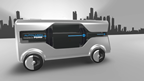 Ford "autolivery" concept.Self-driving vans could transport everything from groceries to medical supplies on the ground, with drones potentially able to reach destinations inaccessible by car, such as high up in a tower block, or where parking would be difficult, impractical, or unsafe.
The automaker says that new data reveals that motorists in Europe’s cities spent up to 91 hours sitting in congested traffic during 2016. It says the “autolivery” service shows how technologies could improve the lives of consumers with smart connected homes, and help to pave the way to a more sustainable future.
The autolivery idea, submitted by Ford employees, paid particular attention to the challenge of goods delivery. Widely considered the most challenging part of the goods delivery process to automate, many companies are working on how to solve the complexity of delivering packages. The pressure to solve this challenge is expected to increase globally in coming years with economic growth and a rise in local deliveries due to online sales.
“Autolivery” was developed by Shanghai-based Ford designers Euishik Bang, James Kuo, and Chelsia Lau.
“The possibility of harnessing autonomous and electric vehicle technology with drones to quickly and easily send and deliver parcels could help to make life better for everyone,” says Bang.
Ford says it intends to have a fully autonomous, SAE level 4-capable vehicle for commercial application in mobility services such as ride sharing, ride hailing, or package delivery fleets in 2021. It also expects continued growth in electrified vehicles offerings, to the point where they outnumber their gasoline‑powered counterparts in the next 15 years. Shared modes of transportation will continue to gain popularity and connected communications between vehicles and infrastructure will grow, the company says.