Augmented Reality Streamlines Spine Surgery
Engineering360 News Desk | January 22, 2017Augmented-reality (AR) surgical navigation technology developed in Amsterdam by Royal Philips is designed to help surgeons perform image-guided and minimally-invasive spine surgery.
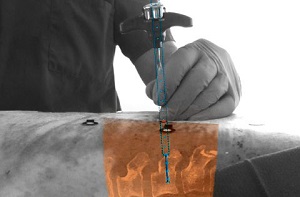 The AR system features optical camera-based navigation and tracking.Credit: Royal PhilipsThe technology uses high-resolution optical cameras mounted on the flat panel X-ray detector to image the surface of the patient. The external view captured by the cameras and the internal 3D view of the patient acquired by the X-ray system are combined to construct a 3D augmented-reality view of the patient’s external and internal anatomy.
This real-time 3D view of the patient’s spine in relation to the incision sites in the skin aims to improve procedure planning, surgical tool navigation, and implant accuracy, as well as reduce procedure times.
A pre-clinical study conducted in a collaboration between Philips, Karolinska University Hospital (Stockholm, Sweden) and the Cincinnati Children’s Hospital Medical Center showed the accuracy of pedicle screw placement with the AR technology was 85%, but 64% without the aid of AR assisted surgical navigation.