Complete Sanitation of Robotic Surgical Instruments Impossible
John Simpson | November 15, 2016It is virtually impossible to remove all contamination from robotic surgical instruments, even after multiple cleanings, according to a study carried out by Japanese researchers. Their results show that complete removal of surface contaminants from these tools may be unattainable even after following manufacturers’ cleansing instructions.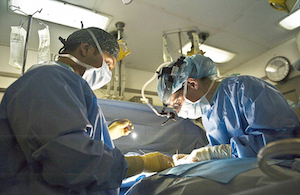 Surgical instruments could be placing patients at risk due to current cleaning procedures. Image credit: Pixabay.
“One of the top priorities for hospitals is to treat patients safely and with minimal risk of infection,” says Yuhei Saito, assistant professor at the University of Tokyo Hospital and lead author of the study. “Our results show that surgical instruments could be placing patients at risk due to current cleaning procedures.”
The study examined 132 robotic and ordinary instruments over a 21-month period. Instruments were collected immediately after use to determine their level of contamination. The researchers used in-house cleaning methods that included manual procedures with ultrasonication, following the manufacturers’ instructions. Measurements of protein concentration were collected from tools after three subsequent cleanings to determine changes in the total amount of residual protein.
According to the study's authors, due to the complex structures of robotic instruments, these tools had a greater protein residue and lower cleaning efficacy compared to ordinary instruments. The cleanings were 97.6% effective for robotic instruments and 99.1% effective for ordinary instruments.
As a result, they suggest that it might be necessary to establish new cleaning standards that specify the use of repeated measurements of residual protein, rather than measuring contamination only once after cleaning.