Blood-based Catalyst for Lithium-Oxygen Batteries
Engineering360 News Desk | October 21, 2016Lithium-oxygen (Li-O2) batteries are viewed as possible successors to lithium-ion batteries, as they can operate for weeks without charging. But Li-O2 batteries must be rendered efficient enough for commercial application and prevent the formation of lithium peroxide, a solid precipitate that covers the surface of the batteries’ oxygen electrodes. A catalyst is needed that supports the oxygen evolution reaction, in which lithium oxide products decompose back into lithium ions and oxygen gas.
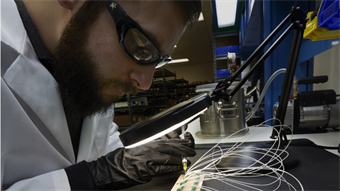
 A molecule found in blood can improve lithium-oxygen battery efficiency. Image source: Michael S. HelfenbeinHeme, a component of hemoglobin that transports oxygen in blood, could be key to this process. Yale University researchers demonstrated that the heme molecule improved the Li-O2 cell function by reducing the amount of energy required to improve the battery’s charge/discharge cycle times. The molecule dissolves into the battery’s electrolytes and acts as a redox mediator, which lowers the energy barrier required for the electrochemical reaction to take place.
“When you breathe in air, the heme molecule absorbs oxygen from the air to your lungs and when you exhale, it transports carbon dioxide back out,” says Andre Taylor, associate professor of chemical and environmental engineering. “So it has a good binding with oxygen, and we saw this as a way to enhance these promising lithium-air batteries.”