Plastic waste turned into protein-packed cookies
Marie Donlon | September 17, 2026A team from Southern Illinois University (SIU) Carbondale is making cookies using an unexpected ingredient: plastic.
In a bid to repurpose this material, the team modified yeasts so that plastic and agricultural waste could be converted into edible proteins and flavoring molecules. Beyond upcycling a problematic material, the technology could also prove useful in settings such as disaster zones or deep-space missions.
 Source: SIU Carbondale Communications
Developed as part of a NASA-led project that sought to create food for the resource-limited environment of deep-space exploration, the team turned to plastic for making food because plastic and food are both carbon-rich materials.
Specifically, polyethylene terephthalate (PET), one of the most common types of plastic, features molecules with lots of carbon that could be restructured into a protein.
Rather than restructuring that carbon into a protein in a lab setting using chemical reactions and solvents, the team used a more environmentally friendly approach and instead outsourced the work to microbes.
The SIU team modified assorted yeasts — including baker's yeast — to transform molecules found in both plastic and agricultural waste into proteins, vitamins and flavorings.
The team put PET plastic, corn stalks and leaves, and other biomass through an SIU-created process called oxidative hydrothermal dissolution wherein water and oxygen are used at high temperatures and pressures to break down material into microbe-accessible pieces.
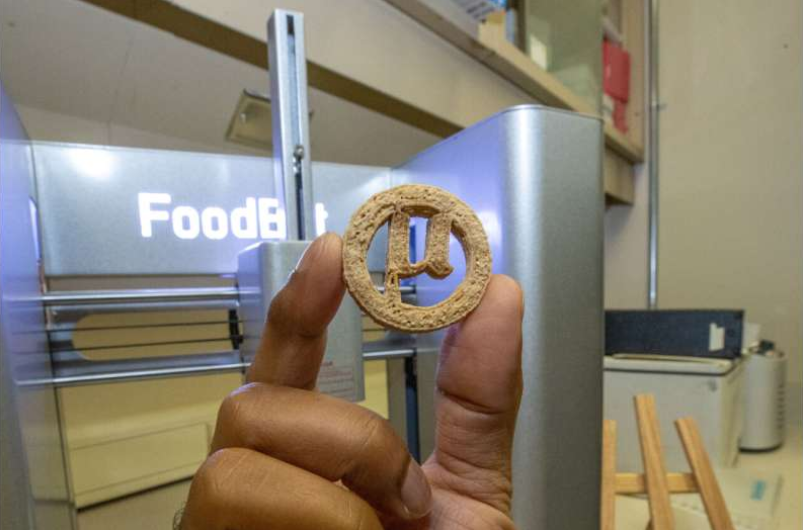
Those pieces are subsequently fed to the programmed yeasts, which convert them into new food ingredients, like proteins, fats and acids. Fiber, starch and sweetener are then added to the mix and extruded through a 3D printer, creating protein-rich cookies aptly called µBites — or “microbites.”
The µBites cookies have been deemed safe to eat and received positive feedback for aroma, though additional taste testing is pending approval. The team is also engineering yeasts to produce flavorings and nutrients from waste materials, making the cookies more appealing to consumers. Future work aims to create more of the cookies’ ingredients biologically, with potential applications on Earth and in extreme environments such as submarines and space colonies.