Textured plastic surfaces destroy viruses on contact
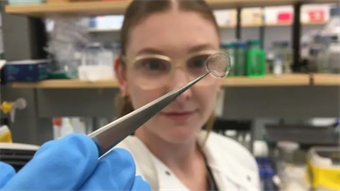
Marie Donlon | May 07, 2026A thin plastic film capable of tearing apart viruses upon contact, thus offering a potential method for keeping high-touch surfaces such as smartphones and hospital equipment from spreading disease, has been developed by a team of researchers from Australia’s RMIT University.
According to its developers, the flexible acrylic surface of the film is textured with ultra-fine structures called nanopillars. These nanopillars reportedly grasp and then stretch the outer shell of the virus, thereby rupturing and killing the virus via mechanical force instead of chemical disinfectants.
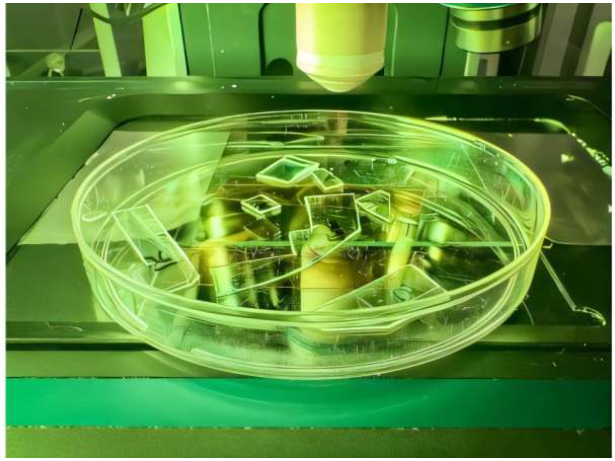 Source: RMIT University
The developers determined that this stretching action is more effective in terms of killing when measured against methods that skewer viruses.
Laboratory tests with human parainfluenza virus 3 (hPIV-3) — which causes bronchiolitis and pneumonia —showed that about 94% of viral particles were destroyed or inactivated — thus losing their ability to replicate — within 60 minutes of contacting the surface.
The team suggests that one day this film could potentially be used to cover surfaces like phone screens, keyboards and hospital tables, killing viruses on contact without using harsh chemicals.
Further, the team also discovered that the distance between the nanopillars mattered far more than their height.
"By tweaking the spacing and height of the nanopillars, we discovered how tightly they are packed together is far more important than how tall they are for breaking viruses apart," the team added. "When the nanopillars are closer together, more of them can press on the same virus at once, stretching its outer shell past breaking point."
In other words, the closer together the nanopillars are, the better they work, with the strongest impact coming from densely packed nanopillars with about 60 nanometers between them. Meanwhile, expanding the gaps to 100 nm reportedly reduced the antiviral power and 200 nm switched it off.
An article detailing the surface, “Designing Scalable Mechano‐Virucidal Nanostructured Acrylic Surfaces for Enhanced Viral Inactivation,” appears in the journal Advanced Science.