Get to know these fan arrangements to optimize your next installation
April 01, 2026In this video, James Mathis covers the different industrial fan arrangements for both centrifugal and axial configurations. Read more below or watch here!
In the context of industrial fans, the word arrangement deals with where the components of a fan’s drive train are located.
First, this article will look at the three direct driven centrifugal fan arrangements, where the driver motor is either coupled to the fan shaft assembly or the wheel is mounted directly on the driver. Direct drive arrangements include arrangements 4, 8 and 7.
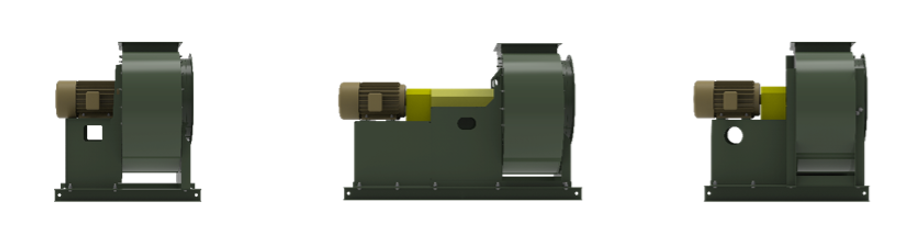 Figure 1: Direct drive arrangements include arrangements 4, 8 and 7. Source: The New York Blower Company
The arrangement 4 fan is the simplest fan arrangement with the wheel being mounted directly to the driver. This design is also the most economical of the direct drive arrangements with limited components to the fan assembly. Arrangement 4 fans do have some limitations as they are not well suited for higher temperatures above 200° F, have limited shaft seal options and are not well suited to handle bulk materials through the fan.
There are other variations of the arrangement 4 fan as well: Arrangement 4F, arrangement 4V and arrangement 4H.
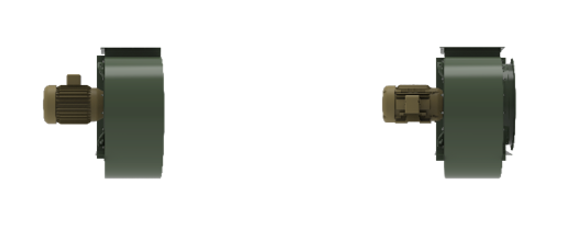 Figure 2: The arrangement 4 fan. Source: The New York Blower Company
The arrangement 4F includes a fan housing that is flush mounted to the customer’s equipment at the inlet and does not have a motor pedestal. The motor is C-faced and mounts directly to the fan housing or drive side plate.
The 4V (vertical) and 4H (horizontal) are other arrangement 4 variations, mounted in each respective orientation via the inlet flange, while the motor is mounted in the same fashion as the arrangement 4F.
The next direct drive example is the arrangement 8 fan. This fan includes two bearings and a fan shaft that supports the impeller in an overhung position. The wheel is hanging off the end of the fan shaft and supported by bearings that are both located on the drive side of the fan. The fan shaft is coupled to the driver shaft via a coupling to drive the wheel and shaft. This arrangement includes a bearing pedestal and a motor pedestal to support the drive train. It is very versatile for many applications including heat, low leakage requirements, bulk material handling and vibration constraints. With this versatility comes higher costs due to the complexity of the fan design with drive components and pedestals for the drive train.
The last direct drive arrangement is the arrangement 7 fan. The arrangement 7 utilizes a center hung wheel configuration where the wheel is supported by bearings on both the inlet side and the drive side of the fan housing. The arrangement 7 also includes a motor pedestal and the driver is coupled to the fan shaft. This arrangement can allow for smaller bearings as the wheel is supported on both sides and can be used in high-speed applications to assist with bearing speeds and loads versus an overhung arrangement.
Next, we’ll look at belt driven fan arrangements. These fans are driven by a motor that’s connected to a sheave and belt drive system. Belt drive arrangements include arrangements 1, 3, 9 and 10. The arrangement 1 fan has two bearings mounted to a pedestal and fan shaft that support the wheel from the drive side of the fan in an overhung position. This arrangement requires an independently mounted motor base or a unitary base for the driver to be mounted on. Arrangement 1 fans are versatile for various applications including high temperature, low leakage and bulk material handling.
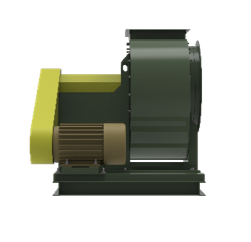 Figure 3: The arrangement 1 fan. Source: The New York Blower Company
Next is the arrangement 3 belt drive, where the wheel is mounted on the fan shaft directly between two bearings in this center hung configuration. The drive side is determined by the side with the shaft extending past the bearing. Both single inlet or double inlet fans can be used in this arrangement. Typically, arrangement 3 fans have bearings in the airstream and are often used in clean air applications.
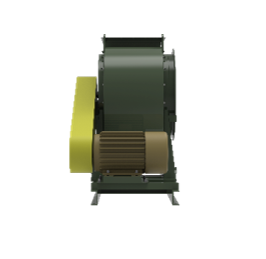 Figure 4: The arrangement 3 fan. Source: The New York Blower Company
The arrangement 9 fan is another belt drive fan option. This fan has the motor mounted on the side of the bearing pedestal or extended just off the side. This arrangement has two bearings and a fan shaft on the drive side with an overhung wheel design. This fan is compact and does not typically require a base to mount the motor. Arrangement 9 fans have a maximum temperature of 600° F due to the motor’s proximity to the fan housing.
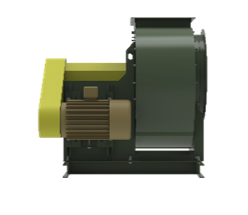 Figure 5: The arrangement 9 fan. Source: The New York Blower Company
There are other variations of the arrangement 9 fan that include the arrangement 9E and the arrangement 9F.
The arrangement 9E, or extended arrangement 9 fan, has a pedestal that has been extended to allow for larger motors mounting on the side of the pedestal.
The arrangement 9F is a configuration of the arrangement 9 fan with the motor mounted to the side of the bearing pedestal in a horizontal orientation, either on a separate pedestal or with an integrated platform on the side, this allows larger motors to be mounted in the arrangement 9 configuration.
The last belt drive arrangement example is the arrangement 10 fan. This fan is the most compact belt drive arrangement and also the most limited arrangement. The fan bearings and shaft are both mounted in the same manner as the arrangement 1 and 9 fans with an overhung wheel. The motor sits inside the bearing pedestal and motor sizes are limited based on the space restrictions inside the pedestal. The arrangement 10 is the most economical example of the belt drive fans and is considered a light industrial fan typically used in lighter and less demanding applications than other arrangements.
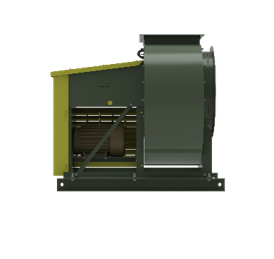 Figure 6: The arrangement 10 fan. Source: The New York Blower Company
There are two drive arrangements available on the axial and inline fans. There is the arrangement 4 direct drive unit and the arrangement 9 belt drive unit.
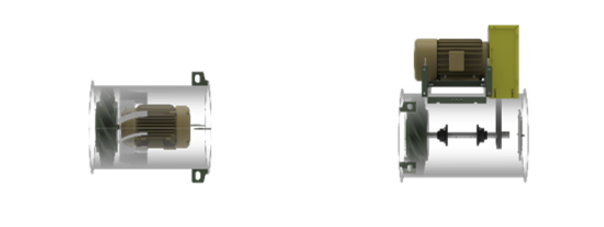 Figure 7: The arrangement 4 and 9 fans. Source: The New York Blower Company
The arrangement 4 fan has a wheel that is mounted directly on the motor shaft, and the motor is in the airstream of the fan. While cost-effective, the arrangement 4 fan does have temperature and airstream make-up limitations based on the motor being mounted inside the airstream.
The arrangement 9 fan includes a set of bearings and a fan shaft for wheel mounting. The belt drive extends out through the belt well to the motor, which is mounted on the outside of the fan.
Now let's look at the variations of these axial fan drive arrangements. First, there is the duct mount arrangement, offered in 4D or 9D, where the fan is mounted horizontally between duct work. A similar duct mount version is the arrangement 4V or 9V where the fan is mounted vertically in the duct.
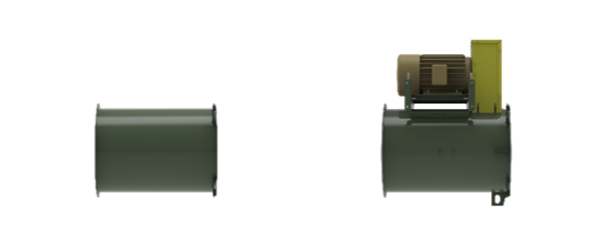 Figure 8: The arrangement 4D and the arrangement 9D. Source: The New York Blower Company
Next, there are arrangement options such as the arrangement 4M and 9M that include mounting legs to use for floor, wall or even ceiling mounting.
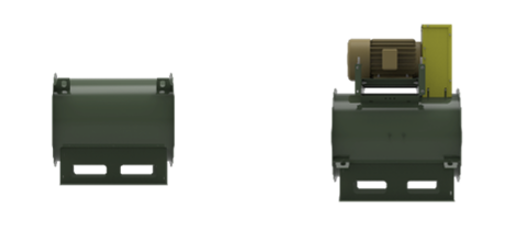 Figure 9: The arrangement 4M and the arrangement 9M. Source: The New York Blower Company
This next variant is the roof mount, arrangement 4R or 9R. These arrangements come standard with a roof curb cap adapter for mounting to the roof of a building.
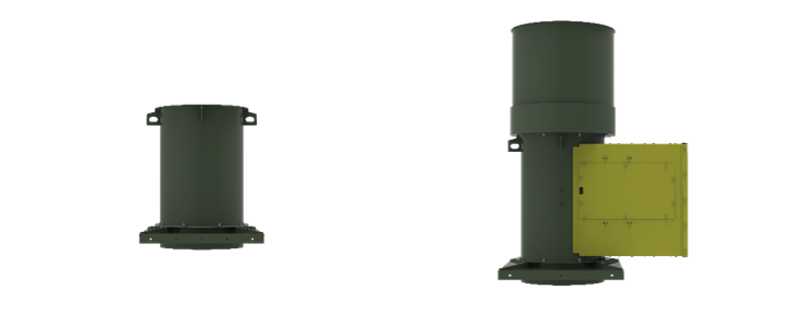 Figure 10: The arrangement 4R and the arrangement 9R. Source: The New York Blower Company
Finally, the last variation is the suspended mount. The 4S and 9S arrangements typically include isolation to support the fan independently from the duct system by these hanging supports.
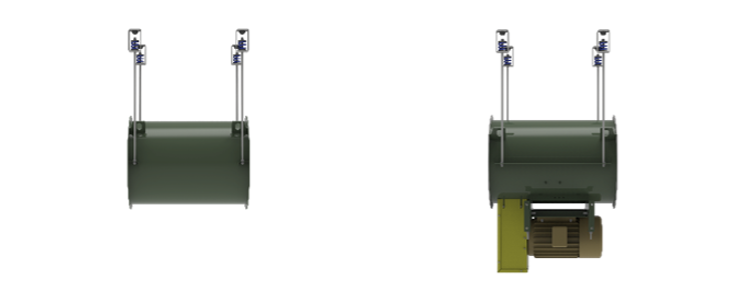 Figure 11: The arrangement 4S and the arrangement 9S. Source: The New York Blower Company
To summarize, there are many fan arrangements available, and by understanding a system’s installation restrictions and maintenance requirements, the best fan configuration for an application can be identified.
About The New York Blower Company
The New York Blower Company offers personalized air-movement solutions, backed by uncommon support. The New York Blower Company is a world leader in air-movement solutions, supporting customers with pre-engineered industrial fans, engineered-to-order custom fans, aftermarket parts, field services and maintenance support.
The New York Blower Company is committed to partnering with its customers to make meaningful contributions to their success by providing more than a century of expertise with a history that dates back to 1889. Thanks to six manufacturing facilities in the United States, The New York Blower Company offers the industry’s best lead times and the benefits of having dual sources through one supplier. In addition, their research and development facility is the largest AMCA accredited testing lab in North America, ensuring peak performance and aerodynamic efficiency.
When customers work with The New York Blower Company, they aren’t just purchasing an industrial fan, they are receiving peace of mind, the confidence of a reliable installation and unmatched service.