Cooling intelligence in data centers: Backward curved fan technology
November 03, 2025The thermal management design constraint
In high-density data center environments, thermal management is a core design constraint. As rack power densities increase and airflow pathways become more restrictive, cooling systems must evolve to maintain operational stability, minimize energy consumption and support long-term reliability.
This article examines the role of backward curved centrifugal fans, with a focus on their mechanical and aerodynamic characteristics, integration potential and suitability for data center applications. It highlights the engineering rationale behind their use and outlines how Pelonis Technologies Inc. has adapted this fan architecture for embedded and modular deployments.
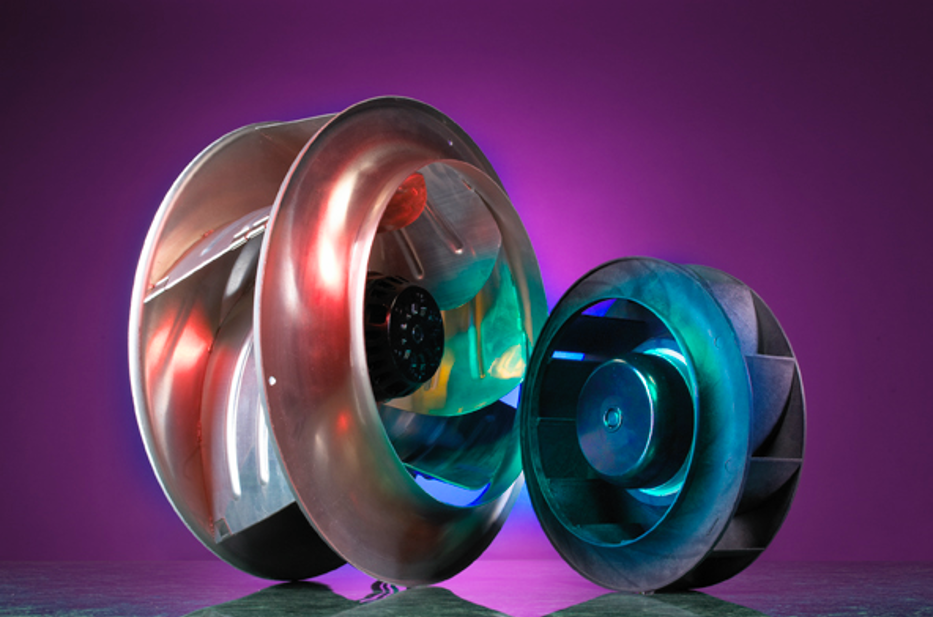 Figure 1: Backward curved fans differ from axial and forward curved designs in several key respects. Source: Pelonis Technologies Inc.
Fan geometry and flow mechanics
Backward curved fans differ from axial and forward curved designs in several key respects:
• Blade orientation: The blades curve opposite the direction of rotation, producing a radial airflow pattern.
• Pressure profile: These fans generate higher static pressure, making them suitable for ducted systems and enclosures with airflow resistance.
• Efficiency curve: Backward curved fans exhibit a non-overloading power characteristic, meaning power consumption stabilizes as airflow increases.
• Noise behavior: The blade geometry reduces noise and vibration, contributing to lower acoustic emissions.
These properties make backward curved fans particularly effective in scenarios where airflow must be maintained through filters, baffles or densely packed electronics.
Mechanical and electrical characteristics
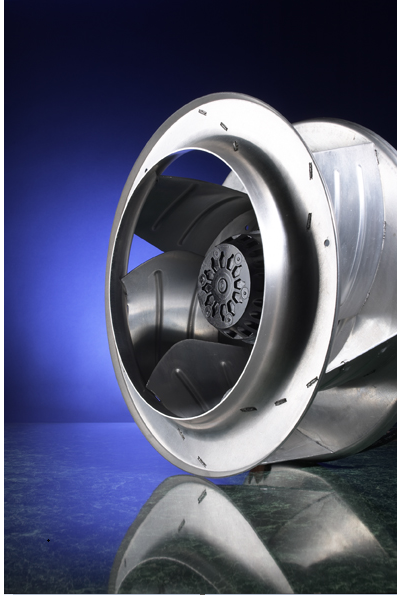 Figure 2: These fans are compliant with RoHS, UL and CE standards, supporting deployment in regulated environments. Source: Pelonis Technologies Inc.
Pelonis Technologies Inc. offers backward curved fans in both AC and DC configurations, with design parameters optimized for embedded cooling in data center hardware.
Mechanical design:
• Impeller sizes: 133 mm to 355 mm
• Housing materials: Thermoplastics, steel or aluminum
• Mounting options: Flange, panel or custom bracket configurations
• Ingress protection: IP20, IP23 and IP44 or higher ratings available
Electrical specifications:
• Voltage ranges: 115 V to 230 V AC/12 V to 48 V DC
• Motor types: Brushless DC, AC or EC motors
• Bearing systems: Lubricated ball bearings rated for 40,000+ hours
• Insulation class: B or F, depending on operating temperature requirements
These fans are compliant with RoHS, UL and CE standards, supporting deployment in regulated environments.
Integration in data center architectures
Rack-level cooling
In 1 U to 4 U server configurations, airflow paths are constrained by chassis geometry and component placement. Backward curved fans can be embedded within these enclosures in order to:
• Maintain airflow across heat sinks and memory modules
• Compensate for pressure drops caused by filters or cable routing
• Operate quietly in mixed-use environments
Their compact form factor and high-pressure capability make them suitable for direct integration into server boards or power distribution units.
Edge deployments
Edge data centers often operate in acoustically sensitive environments — retail spaces, telecom cabinets or industrial control rooms. In these contexts, backward curved fans offer:
• Reduced noise due to blade geometry
• Vibration-free operation to protect sensitive electronics
• Environmental sealing for dust and moisture ingress
These features support stable thermal conditions.
Performance metrics and operating envelope
Performance curves are available for each model, showing airflow versus pressure and power consumption versus speed. Engineers can use these curves to match fan selection to enclosure resistance and thermal load.
Deployment example: Telecom edge node retrofit
A telecom operator retrofitted 18 edge sites with backward curved fans from Pelonis Technologies Inc. to address thermal instability in compact server racks. The original axial fans failed to maintain airflow through restrictive chassis designs, leading to elevated inlet temperatures and throttling.
Results:
• ΔT reduction: 25% lower inlet temperatures
• Acoustic improvement: 40% reduction in fan-generated noise
• Reliability gain: No fan-related failures over 12 months
• Energy efficiency: Lower power draw due to optimized motor control
This deployment illustrates the suitability of backward curved fans for constrained, acoustically sensitive environments.
Design considerations for engineers
When selecting fans for data center applications, engineers should evaluate:
• Pressure requirements: Match fan capability to enclosure resistance.
• Acoustic constraints: Consider blade geometry and housing design.
• Mounting and airflow direction: Ensure compatibility with chassis layout.
• Electrical integration: Verify voltage, connector type and control interface.
• Environmental exposure: Select appropriate IP rating and material durability.
Pelonis Technologies provides detailed datasheets and CAD models to support design integration and airflow simulation.
Comparative analysis: Fan types
Backward curved fans are optimal for high-resistance airflow paths, such as ducted enclosures or filtered intake systems. Axial fans remain suitable for open-frame cooling, while forward curved fans are typically used in HVAC or low-pressure applications.
Regulatory and environmental factors
Data centers are increasingly subject to environmental and safety regulations. Pelonis Technologies Inc. fans support compliance with:
• RoHS Directive: Restricts hazardous substances in electrical equipment.
• CE and UL marking: Ensures conformity with EU and UL safety and performance standards.
• IP ratings: Protect against ingress of dust and water.
• Low-noise design: Optimal impeller and enclosure designs reduce noise output.
These attributes support deployment in regulated facilities and contribute to sustainability metrics such as PUE and carbon footprint.
Engineering support and procurement
Pelonis Technologies Inc. offers:
• Application engineering: Assistance with airflow modeling and fan selection
• Customization: Voltage, connector and mounting options
• Documentation: Performance curves, 3D models and compliance certificates
• Procurement flexibility: Support for prototyping and volume production
Lead times and MOQ vary by model and customization level. Pelonis Technologies Inc. maintains global distribution channels and technical support infrastructure.
Conclusion: Functional cooling for high-density infrastructure
Backward curved fans represent a mature, mechanically efficient solution for data center cooling challenges. Their ability to maintain airflow under pressure, operate quietly and integrate into compact enclosures makes them a valuable tool for engineers designing next-generation infrastructure.
Pelonis Technologies Inc. offers a robust portfolio of backward curved fans tailored for embedded, modular and edge deployments. By understanding the mechanical and electrical characteristics of these fans, engineers can make informed decisions that enhance system reliability, thermal stability and acoustic performance.
For more information, watch the accompanying video that appears courtesy of Pelonis Technologies Inc.