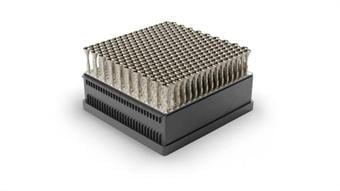
Scientists mimic mantis shrimp armor to create ultra-tough material
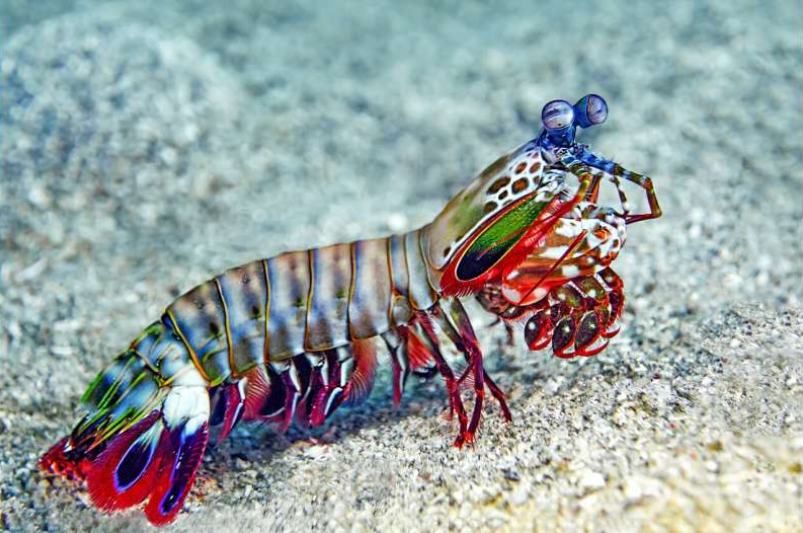
Marie Donlon | July 22, 2025Taking inspiration from the mantis shrimp, an invertebrate capable of cracking clamshells with the force of a .22 caliber bullet thanks to its strong exoskeleton, scientists at the National Institute of Standards and Technology (NIST) have developed synthetic versions of these structures capable of withstanding the force of microprojectiles.
The team discovered that they could adjust specific parameters of the structures to alter how they absorbed and dissipated the impact energy.
"The results and insights of this research mark an important advance in bioinspired materials design with applications for aerospace, such as helping spacecraft survive the impact of micrometeoroids and protecting orbiting satellites that collide with debris," the NIST team explained.
The scientists suggest that such structures could be used for other possible applications including improved bullet-resistant glass, blast-resistant building materials and more protective helmets.
The team determined that the mantis shrimp’s appendages stayed intact after smashing the shells of other creatures thanks to the microscopic "Bouligand structures" in the shrimp's exoskeleton.
"Bouligand structures are a universal material platform for impact resistance in nature, and we wanted to learn more about them, so we produced and tested them in the lab," the researchers explained.
To do that, structures were synthesized from cellulose nanocrystals derived from plant fibers. These nanocrystals then self-assembled into plates that layered on top of each other — similar to rotating stacks of plywood — and thus created stacks that formed the synthetic Bouligand structures.
The crystals were then modified using high-frequency sound waves before they were assembled into thin films that functioned as the test material.
Once developed, the team tested the impact resistance of the thin films by firing silica-based microprojectiles at them at speeds of roughly 600 meters per second. The microprojectiles were propelled toward the material using a high-intensity laser while the team captured images of the microprojectiles impacting the thin films using an ultrafast camera.
When reviewing those images, researchers found that a microprojectile could leave a permanent indentation while simultaneously bouncing back like a tennis ball hitting the ground. The degree of indentation achieved and the amount of this so-called bounce-back was dependent upon how the energy dissipated or spread out in shockwaves following the microprojectile's impact.
By making modifications to assorted factors that affect the sample’s mechanical properties, the team determined that they could influence how the energy dissipated. For instance, the team could accomplish this by making nanocrystals thicker or altering their density. As such, they discovered that the microprojectiles left behind permanent indentations in the thinner films, while the thicker films successfully redirected the shockwaves from the impact.
An article detailing the findings, “Controlling impact mitigation via Bouligand nanostructures,” appears in the journal Proceedings of the National Academy of Sciences.