Wearable sweat sensor offers instant hydration tracking
Marie Donlon | April 29, 2025A new sweat sensor designed by a team of University of California Berkeley researchers is capable of measuring changes in the wearer’s hydration status and helps them to decide when it's time to drink some water.
The tiny wearable device measures electrodermal activity (EDA) — which is an electrical property of the skin — to monitor hydration levels during physical activity performed by the wearer. Previously, EDA has been thought to only be effective at analyzing mental stress.
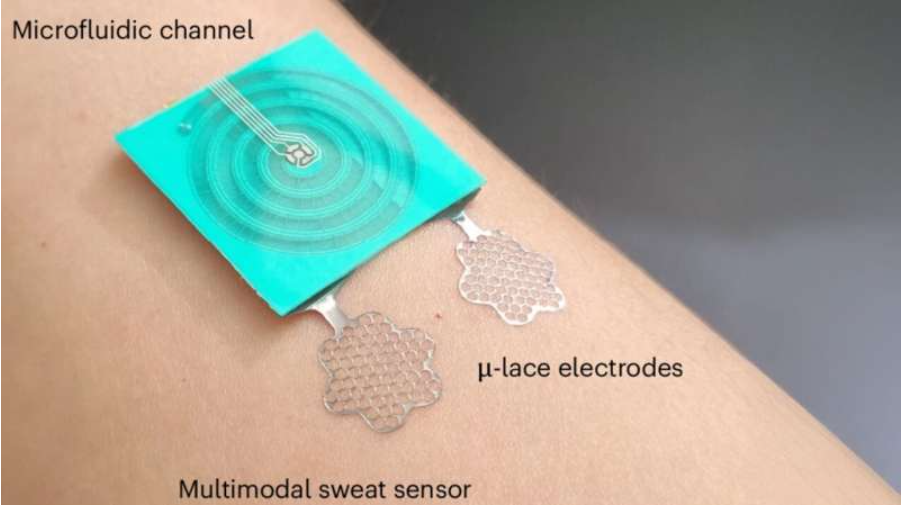 Source: Nature Electronics (2025). DOI: 10.1038/s41928-025-01365-7
The new wearable is expected to pave the way for every day, passive monitoring of hydration and stress using wearable devices much like smartwatches
"Because our sensor is thin, breathable and comfortable to wear, it can be seamlessly integrated into the back of a watch or fitness tracker to provide real-time feedback without bulky equipment or disposable components," the researchers noted. "This makes it easier for individuals to continuously track their physical exertion, hydration status and emotional stress throughout the day."
The team added that athletes might use the device to avoid dehydration amid training while office workers and students might use the device to monitor stress to possibly improve focus and balance.
While previous research suggested that because heavy sweating during exercise tends to saturate the skin and disrupt the signal, thereby making it tough for sensors to detect electrical changes to the skin, the team managed to avoid this outcome by using breathable, water-permeable electrodes that stop sweat from accumulating at the skin surface.
Specifically, the team created and tested three different water-permeable electrodes — micro-lace electrodes, spiral metal wire electrodes and carbon fiber fabric electrodes — all of which are non-permeable and trap sweat under the sensor. Once the researchers placed each of these electrodes on different parts of the body, EDA was measured as participants performed both physical tasks, such as cycling, and mental tasks, such as IQ tests.
"By comparing the EDA signals with localized sweat measurements and overall fluid loss from body weight, we evaluated how well each electrode tracked sweat production," the researchers noted. "This approach allowed us to identify effective sensor designs and body sites for using EDA to monitor hydration and to distinguish between signals caused by physical exertion and those driven by mental stress."
The new wearable is detailed in the article, “Electrodermal activity as a proxy for sweat rate monitoring during physical and mental activities,” which appears in the journal Nature Electronics.