Wearable Sensors That Measure Dehydration
Engineering360 News Desk | January 31, 2017Researchers from North Carolina State University have developed a wearable, wireless sensor that can monitor a person's skin hydration for use in applications that need to detect dehydration before it poses a health problem.
The device is lightweight, flexible, and stretchable and has already been incorporated into prototype devices that can be worn on the wrist or as a chest patch.
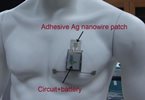 Devices can be worn as a chest patch Researchers have developed technology that allows an individual's skin hydration to be tracked in real time. They say the sensor could be used to protect the health of people working in hot conditions, improve athletic performance and safety, and track hydration in older adults or in medical patients suffering from various conditions. It may even be used to tell how effective skin moisturizers are for cosmetics.
The sensor consists of two electrodes made of an elastic polymer composite that contains conductive silver nanowires. These electrodes monitor the electrical properties of the skin. Because the skin's electric properties change in a predictable way based on a person's hydration, the readings can tell how hydrated the skin is.
In lab testing using custom-made artificial skins with a broad range of hydration levels, the researchers found that the performance of the wearable sensor was not affected by ambient humidity. And the wearable sensors were just as accurate as a commercially available hydration monitor that operates on similar principles, but uses rigid wand-like probes.
The researchers incorporated the sensors into two different wearable systems: a wristwatch and an adhesive patch that can be worn on the chest. Both the watch and the patch wirelessly transmit sensor data to a program that can run on a laptop, tablet or smartphone. This means the data can be monitored by the user or by a designated third party.
What's more, the sensor is relatively inexpensive, costing about $1 and the overall manufacturing cost of the wearable systems developed would be no more than a common wearable device, such as a Fitbit.