Biodegradable sensors may enhance crop growth, cut e-waste
Marie Donlon | April 29, 2025According to the developers, the sensors are composed of electronic materials that degrade into plant nutrients, which function as fertilizer to encourage crop growth.
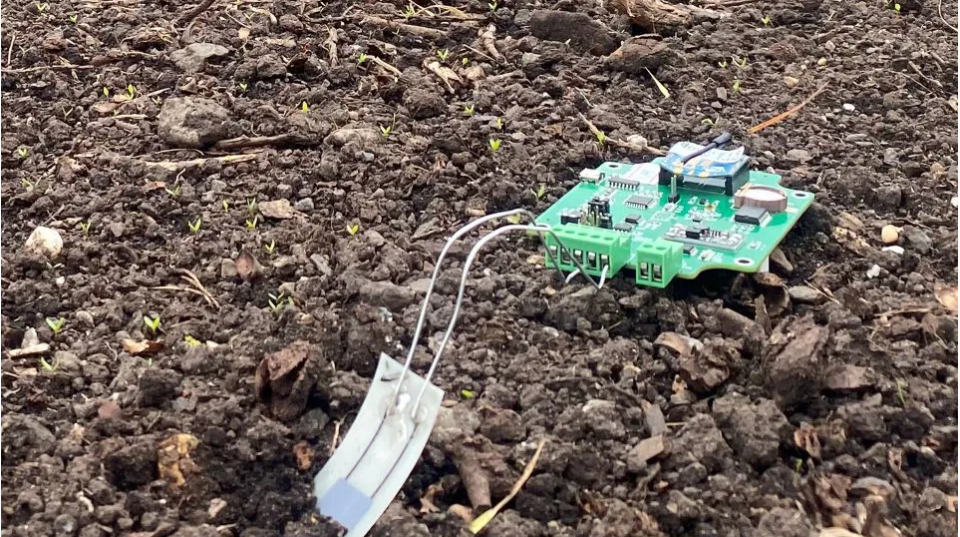 The sensors can be ploughed back into the fields to help nurture crops. Source: Glasgow University
“We urgently need to find a way to make digital agriculture more sustainable in the years to come. Currently, around 80% of the world’s electronics head straight to landfill once they’ve reached the end of their useful life, which creates massive environmental and public health challenges from the toxic materials which many of them contain. We’re keen to continue expanding our biodegradable sensor’s ability to detect other key indicators of plant growth and soil health. That could include adding sensitivity to ‘forever chemicals’ like PFAs, which have significant environmental impact,” the researchers explained.
The team noted that the biodegradable front-end sensors were coupled with common electronics to monitor crop health and suggested that their modular approach both enhances the reusability of the existing electronic systems while also reducing electronic waste.
This modular, hybrid electronics architecture has been applied to “digital agriculture,” which is an approach to farming that monitors crop growth and environments using networked sensors. Yet, current iterations of the sensors used in digital agriculture are composed of non-recyclable materials.
As such, the team developed a digital agriculture sensor using sustainable materials and combined a biodegradable patch with a matchbook-sized reusable electronic module.
To manufacture the sensor patches, the researchers used a screen printing process wherein conductive tracks were printed onto a biodegradable polymer substrate using graphene-carbon ink. A sensing layer was then created when molybdenum disulfide was printed on top. The researchers explained that all of the materials used naturally break down into plant nutrients.
Further, data from these sensors — which can detect changes in pH and temperature that might point to infections in crops — are collected through the electronic module and can be sent wirelessly to computers, which could one day potentially help farmers create a detailed picture of crop health.
In the lab, the team determined that the sensors reliably monitored soil pH levels — specifically with steady performance displayed in solutions ranging from pH 3 to pH 8 over a period of two weeks. Additionally, the sensors also detected traces of ethephon, which is a plant growth regulator that can prove toxic to humans and wildlife if it contaminates groundwater. The team concluded that once the sensors reach the end of their useful lifecycle, the sensors will degrade into primary and secondary nutrients to support future plant growth.
An article detailing these sensors, “Hybrid Agricultural Monitoring System with Detachable, Biodegradable, and Printed pH Sensors with a Recyclable Wireless Sensor Network for Sustainable Sensor Systems,” appears in the journal ACS Applied Electronic Materials