Team creates perching drones with a hugging-wing design
Marie Donlon | July 25, 2024Taking inspiration from animal limbs, the researchers explained that the new drones feature dual-purpose wings for both aerial gliding and secure perching — capabilities that traditional drones cannot typically accomplish.
 Source: EPFL
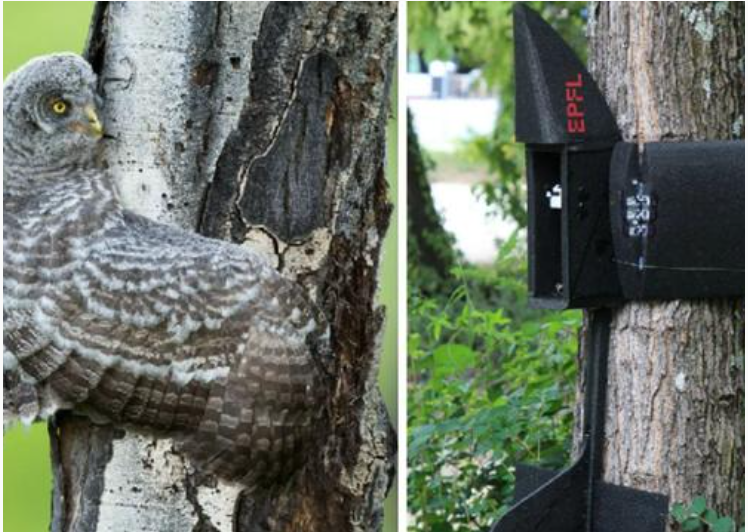
For instance, when the robots collide with a pole, they are designed now to raise their noses so that they can passively reorient from horizontal to vertical flight and then subsequently hug their wings to perch.
To demonstrate such capabilities, the team created PercHug, which is a 550 g winged drone inspired by geckos. According to its developers, PercHug can passively perch on vertical poles — such as scaffolding, towers or trees. Further, the drone uses an “upturned nose” for reorienting and also includes foldable wings for wrapping.
PercHug also features an unlatching mechanism, a bistable trigger, foldable wings outfitted with hooks and a tail for stability and resting.
The team noted that such robots promise to enable access to locations like towers for infrastructure inspection, to enhance surveillance on lamp posts or potentially monitor biodiversity and wildlife behavior in environmental conservation efforts.
An article detailing the research, “Crash-perching on vertical poles with a hugging-wing robot,” appears in the journal Nature.