A biosensor for accurately determining the freshness of meat
Marie Donlon | February 21, 2024A team of scientists from the Vietnam Academy of Science and Technology, VNU University of Science, Hanoi University of Science and Technology and the Russian Academy of Sciences has jointly developed a biosensor that determines the freshness of meat.
According to its developers, the device uses a porous graphene electrode embedded with zinc oxide nanoparticles to accurately detect aging byproducts in meat, thereby ensuring its quality and safety.
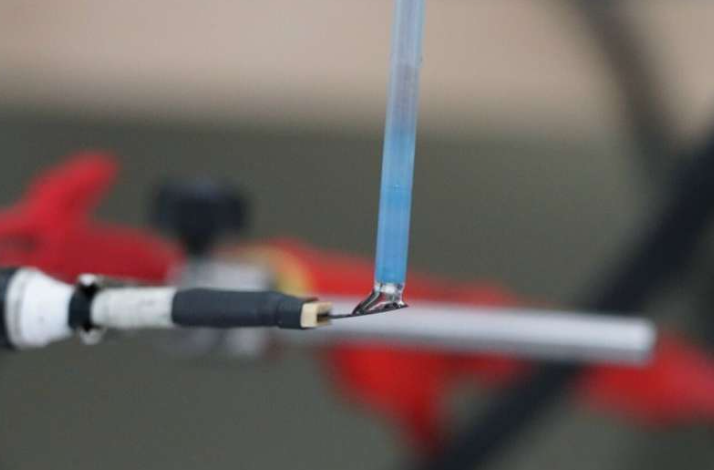 Source: Ngo Thi Hong Le
To avoid the significant health risks associated with consuming non-fresh meat — for instance, nausea, vomiting, diarrhea, abdominal pain, and in extreme cases, dehydration and organ failure — the team’s biosensor helps to detect hypoxanthine (HXA), a key indicator of the freshness of meat that forms when adenosine triphosphate (ATP), the energy-providing molecule present in cells, undergoes decomposition post-mortem.
To create the biosensor, the team used a polyimide film, which undergoes conversion into porous graphene via a pulsed laser process. The zinc oxide nanoparticles within the electrode draw HXA molecules to its surface. Once the interaction occurs, the HXA oxidizes and transfers electrons, thereby causing a voltage spike, which reveals meat freshness.
The biosensor detected HXA levels in pork during lab tests with a 98% rate of accuracy.
The team suggests that the biosensor might one day be used in the manufacture of pharmaceuticals or environmental monitoring.
An article detailing the biosensor, Non-enzymatic electrochemical sensor based on ZnO nanoparticles/porous graphene for the detection of hypoxanthine in pork meat appears in the journal AIP Advances.