These robots roll, twist and map
Marie Donlon | January 15, 2024A team of North Carolina State University (NCSU) researchers has developed a soft robot design dubbed twisted ringbots, which would enable robots to simultaneously roll and spin, as well as achieve orbital movement — all without human control.
Designed to potentially navigate and map unknown environments, the twisted ringbots are composed of ribbon-like liquid crystal elastomers.
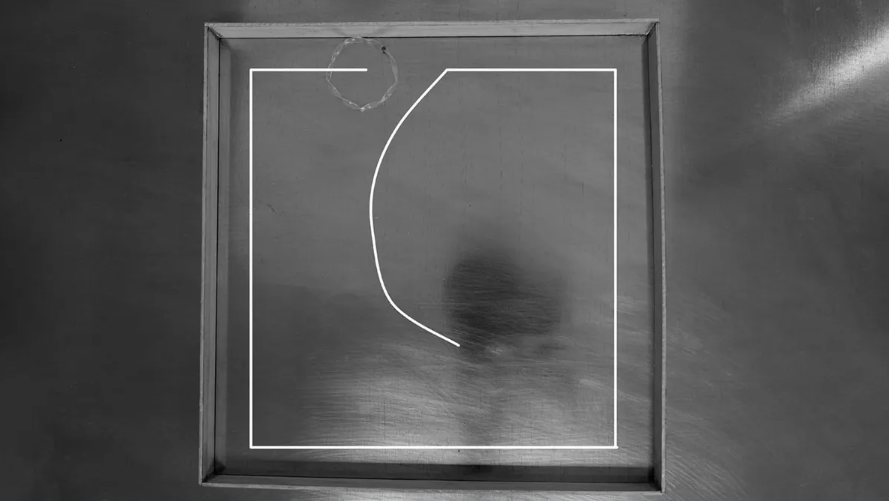 Source: NCSU
The researchers explained that when the ends of the robot are joined to create a loop and the robot is then placed on a surface with temperatures of at least 55° C, the robot will roll. This is reportedly due to the robot’s contact with the hot surface, which forces the loop to contract, thus propelling the robot forward.
Further, the twisted ringbot also spins along its central axis and traces an orbital path around a central point while moving forward. Meanwhile, when the twisted ringbot encounters a boundary, it will adhere to the boundary, thus demonstrating a behavior considered useful for mapping unknown environments, the researchers added.
Instead of external forces dictating the twisted ringbot's behavior, the researchers explained that manipulating the geometry of the devices enables control over the robot’s behavior. For instance, factors such as ribbon width and the number of twists in the robot’s design allow for control over the robot’s speed, direction and other characteristics.
The new soft robot design is detailed in the article, "Defected Twisted Ring Topology For Autonomous Periodic Flip-Spin-Orbit Soft Robot," which appears in the journal Proceedings of the National Academy of Sciences (PNAS).
For more on the twisted ringbots, watch the accompanying video, which appears courtesy of NCSU.