New percussion method detects pipeline elbow erosion
Marie Donlon | December 15, 2023A new method for detecting pipeline elbow erosion has been developed by a team of engineers from the University of Houston.
Pipeline elbows — a critical component of any pressure piping system that carries corrosive liquids for various industries ranging from oil and gas to chemical manufacturing, for instance — connect pipes and change the fluid flow direction of pipeline networks.
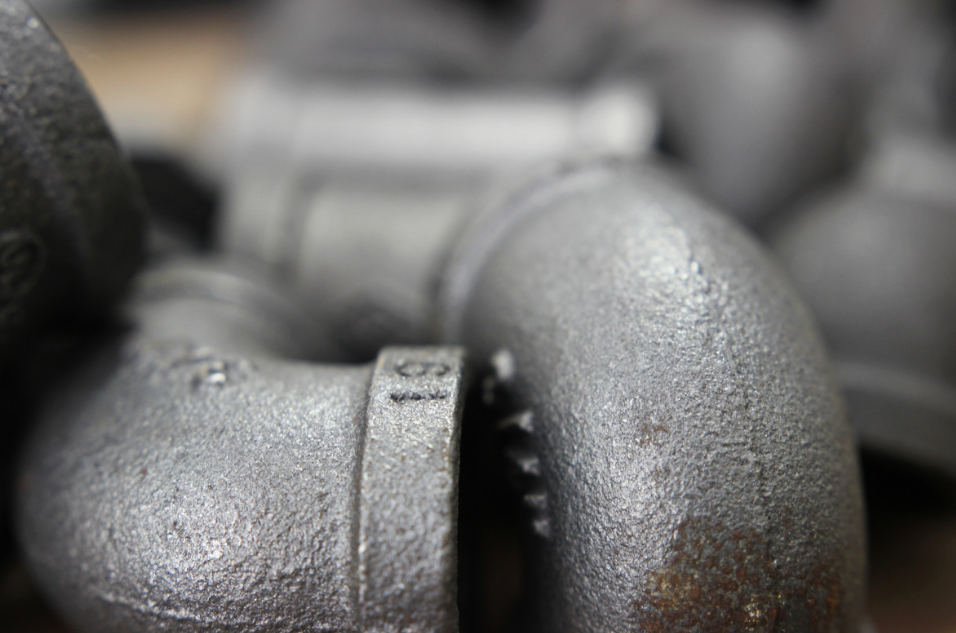
Because these pipeline networks carry corrosive liquids and transport elements including carbon dioxide, hydrogen and methanol, they are vulnerable to corrosion and wear, particularly at the pipeline elbow where mass loss is around 50 times greater than that of the straight pipes, according to researchers. As such, the wall thickness of the pipeline elbow reportedly becomes thinner via continuous operation, thereby leading to bursting or piercing of the pipeline elbow, which could potentially result in economic losses, environmental pollution and various other safety issues.
While most current detection methods of pipeline elbow erosion rely on the installation of a constant-contact sensor, the University of Houston team has devised a new method for pipeline elbow erosion detection that relies on percussion and deep learning.
“We propose a novel detection method for pipeline elbow erosion, combining percussion, variational mode decomposition (VMD) and deep learning,” explained the researchers. “The new method removes the need for the constant-contact sensor and professional operator and shows great applicability in different pipeline elbows with the same structure and dimension and is easy-to-implement, low-cost, and free of the installation of a constant-contact-sensor.”
To detect elbow erosion, the team used VMD to analyze a sound created when a surface is hit. The VMD dissects the sound into seven different modes, while a machine learning technique dubbed multi-rocket is applied to those seven modes to identify and select the most significant component from the original sound created by the single surface hit.
The researchers reported that case studies of the new method, which involved three pipeline elbows with similar structures and dimensions, proved effective.
The findings are reported in the article, "Detection of the pipeline elbow erosion by percussion and deep learning," which appears in the journal Mechanical Systems and Signal Processing.