Smart scalpel promises to improve surgical training
Marie Donlon | October 31, 2023Researchers from Edinburgh University have developed a smart scalpel that promises to improve the training of surgeons and potentially lead to more procedures performed by robots.
A sensor-loaded circuit fits within the handle of the smart scalpel to track the force used during surgical procedures.
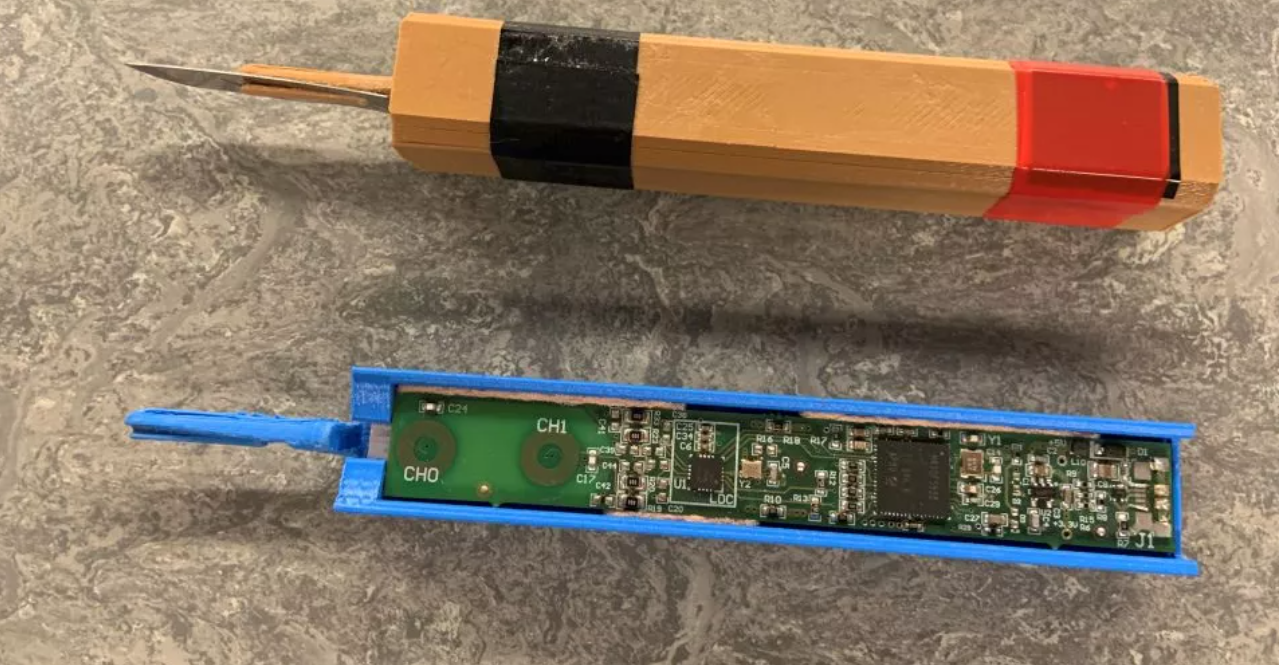 Source: Rohna Crawford
According to its developers, the force-sensing system built into the scalpel collects sensor data as force is applied by the scalpel’s user. This data is then analyzed by a machine learning model developed by the researchers to assess the skills of the surgeon.
To test the new scalpel, the researchers tracked 12 med students and two surgeons as they used the tool to perform elliptical incisions — which are two curved incisions to the skin for removing moles or lesions — in synthetic skin. The researchers reported that overall, the results matched surgical experts’ assessment of each user’s ability.
The team of Edinburgh University researchers said: “We are excited to develop this new system, which uses a combination of real-life sensing technology and machine learning methods to quantitatively assess surgical skill. This system will enable the development of new systems for skill assessment and training, and could one day lead to the creation of automated surgical devices that can assist surgical teams.”
An article detailing the smart scalpel, “A generative force model for surgical skill quantification using sensorised instruments,” appears in the journal Communications Engineering.