Shrink Sleeve Label Shows Boost in Recyclability
Engineering360 News Desk | February 10, 2016A study conducted by Plastic Forming Enterprises, a New Hampshire-based testing and R&D company, indicates that polyolefin-based, roll-fed films may help solve one of the biggest challenges for one of the fastest growing label types, shrink sleeve films.
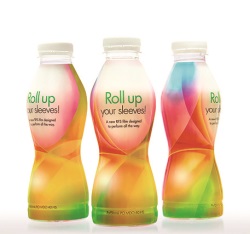 New study highlights a polyolefin-based shrink sleeve that improves recyclability over PETG labels. The study tested UPM Raflatac’s PO shrink sleeve film RafShrink against PET Glycol labels, currently the industry-standard for shrink sleeve labeling of clear PET bottles. Presented at the Association of Plastic Recyclers Technical Forum, results showed that RafShrink provided average detection rates of 92 percent versus 40 percent for PETG sleeve labels.
The tests were conducted at six near-infrared (NIR) equipment manufacturers, demonstrating that clear PET bottles can be detected by NIR sorting equipment even when covered by full-body PO-based shrink sleeves. The results also show that polyolefin material can be cleanly separated from clear PET bottles during the recycling process, as the material floats to the top of the caustic washing solution, unlike PVC and PETG labels, which sink with PET bottle material.
Popular in part because of their 360-degree presentation, full-body shrink sleeve films are among the fastest growing label types, according to AWA Alexander Watson Associates. Shrink sleeves are climbing at 5.5 percent CAGR, and expected to reach 12,750 million square meters in sales by 2018. However, limited recyclability has brand owners seeking ways to increase their recyclability and reduce their environmental footprint.
UPM Raflatac says RafShrink provides high Machine Direction Orienter (MDO) shrinkage of 61 percent at 95 °C as well as best-in-class haze (3 percent), high clarity and gloss. The shrink film can be applied at high speeds, labeling 50,000 containers per hour.