DARPA seeks to develop silent submarine
Marie Donlon | July 30, 2023A silent underwater submarine propulsion system is currently being developed by the U.S. Defense Advanced Research Projects Agency (DARPA).
According to its developers, the propulsion system will contain no moving parts and will offer thrust via electromagnets and water. To develop this new propulsion system, the team based its work on a concept called magnetohydrodynamics (MHD) wherein a fluid is charged and accelerated via an electromagnetic field to produce thrust.
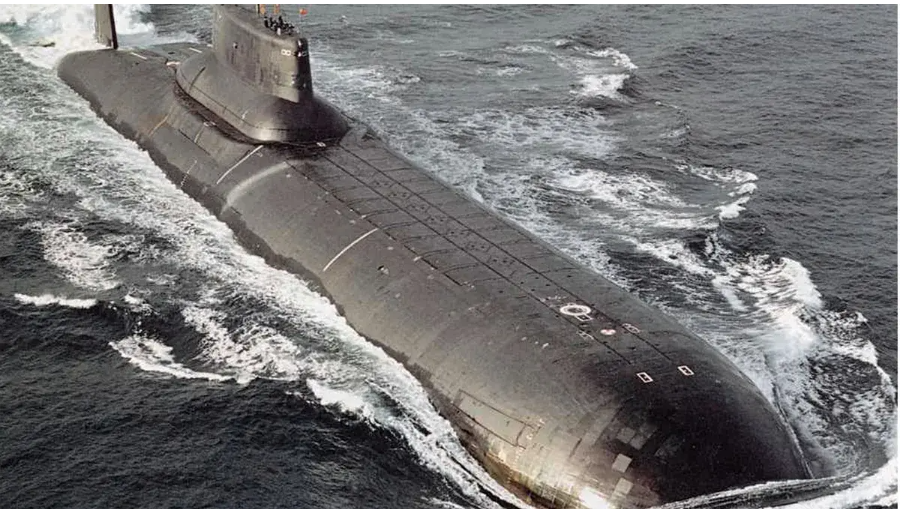 Source: Bellona Foundation/Wikimedia Commons
Because the system features no moving parts, thereby making it very silent, the submarine driven by this propulsion system promises to let the vehicles operate in so-called stealth mode, where they may be allowed to stay hidden from hunters. Further, the propulsion system promises to improve surveillance and intelligence gathering missions with the removal of audio interference from sonar data.
Previously preventing this vehicle from earlier development was the need for extremely powerful electromagnetic coils that are light and efficient for submarine installation as well as electrodes capable of withstanding significant wear due to corrosion, hydrolysis and erosion from the interaction between the magnetic fields, electrical current and saltwater.
To remedy this, DARPA has embarked on the "Principles of Undersea Magnetohydrodynamic Pumps" (PUMP) program, which will take on multiple approaches for developing a military MHD drive.
“In the last couple of years, the commercial fusion industry has made advances in Rare-Earth Barium Copper Oxide (REBCO) magnets that have demonstrated large-scale magnetic fields as high as 20 Tesla that could potentially yield 90% efficiency in a magnetohydrodynamic drive, which is worth pursuing. Now that the glass ceiling in high magnetic field generation has been broken, PUMP aims to achieve a breakthrough to solve the electrode materials challenge," the researchers explained.
For electrodes, the researchers added, gas bubbles form over surfaces, thus minimizing efficiency and collapsing, which subsequently damages the electrodes. However, computer models can reportedly modify hydrodynamics, electrochemistry and magnetics to potentially minimize damage and increase efficiency.
"We’re hoping to leverage insights into novel material coatings from the fuel cell and battery industries since they deal with the same bubble generation problem," the researchers explained. “We’re looking for expertise across all fields to form teams to help us finally realize a militarily relevant scale magnetohydrodynamic drive.”