C-Flex bearings offer infinite life
August 30, 2023Many applications require limited angles of rotation such as position sensing equipment. Although conventional plain bearings may seem acceptable, C-Flex pivot bearings are more reliable. Instead of balls or rollers, the pivot uses crossed springs capsuled in a cylindrical housing. The pivot bearings are self-centering and rotate with a constant torsional spring rate by bending of internal spring beams. They do not require lubrication and are not subject to wear because moving parts do not contact. This also eliminates any need for periodic adjustment or maintenance. Easily pre-set using set screws. More installation options are available.
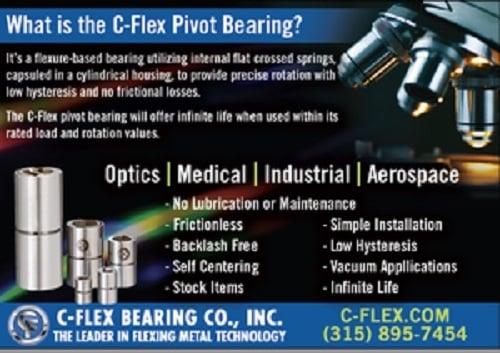 Figure 1: The C-Flex pivot bearing. Source: C-Flex Bearing
Lubrication minimizes friction between moving parts but can outgas or leak contaminating sensitive optics, electronic systems or food products. Bearings requiring lubrication also produce “stiction,*” which can affect measurement or position accuracy. C-Flex pivot bearings do not require lubrication because there are no rolling or sliding components so they are safe for clean room, food service and other sensitive applications.
Wear results when parts contact each other. In applications with small rotation angles, lubricants often do not reach all contacting surfaces. This can speed up wear and diminish accuracy. Moving parts in the C-Flex pivot bearing do not contact each other because their crossed springs keep inner and outer rings separate. The pivots’ high fatigue strength allows cycling indefinitely without wear or inhibiting performance.
Backlash is slippage or play in linked components, which results in positioning errors. Backlash is often the result of excessive play in bearings. Pre-loading bearings overcome this problem to some extent. However, when rotation is limited, wear accelerates and produces backlash in pre- loaded bearings. The C-Flex pivot bearing provides non-contact motion throughout their life, permanently preventing backlash.
Contamination from dirt and debris can lead to quick, catastrophic bearing failure. Even the toughest seals used in ball and roller bearings can break down in excessively contaminated environments. Temperature extremes, vacuums, even various types of radiation will inhibit life expectancy and accuracy of conventional bearings. The C-Flex pivot bearing on the other hand, requires no seals, no lubricants and will function in harsh environments.
The C-Flex bearings are available in standard sizes ranging from 1/8 inch to 1 inch diameter with load capacities to 1,600 lbs. Special mounting features and heavier loads can be customized to customer requirements. Applications include optical devices, semiconductor equipment, food processing/packaging, vibration sensing, torque measurement, position sensing and more.
The best way to achieve infinite life from C-Flex pivot bearings is to design for them. Let C-Flex Bearing Company help meet these challenges in today’s industry.
Learn more about the benefits and applications of C-Flex Bearing’s pivot bearings, see their FAQs that answer questions on loading, stiffness, life expectancy, environment mounting and more.
Custom products
C-Flex Bearing Company can provide a vast array of custom alterations to their standard pivot bearings. If you have an application where a standard pivot bearing will not suffice, then see if one of the alterations offered below will suit your needs. If you have a requirement that can’t be met with the options listed here, feel free to contact C-Flex Bearing Company and they will work with you to create a custom product for your application.
Watch the video: A short intro to our flexible couplings.
C-Flex Bearing Company, Inc.
C-Flex Bearing Company, Inc. is a privately owned small business in central New York. They have been manufacturing dependable, quality, price competitive components for the aerospace, industrial, semiconductor and medical fields since 1993. Their longevity and success speak for itself. Contact them today.
Information on pivot sizes and performance properties can be found below:
* Stiction results from higher initial energy requirement to overcome stationary surface tension and inertia, compared to the energy required to maintain motion.