
Size and Weight Reduction Design Tips — Bearing Choice Can Make a Big Difference
November 17, 2017Sponsored content
Modern automobiles use dozens of bearings throughout the vehicle. While tapered roller wheel bearings are most likely the first bearings that come to mind for the average consumer, automotive engineers realize that bearings are vital to the proper performance of many other automotive functions. These applications include:
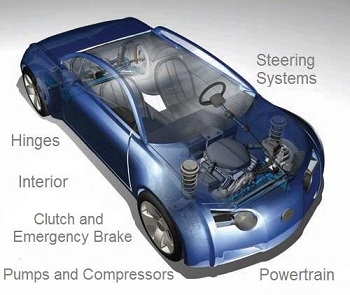 Figure 1: Automotive bearing applications. Source: Saint-GobainHinges (door, hood, trunk, windshield wiper)
- Interior (seat pivot and height adjustment points)
- Steering systems (including steering rack guide bushing, worm gear bearing and torsion bar)
- Clutch and emergency brakes (mechanical cable controls)
- Powertrain (transmission system, driveshafts, rocker arm)
- Pumps and compressors
Bearing Alternatives for Automotive Lightweighting
Automotive engineers have several options when selecting bearings for their application, including roller bearings, ball bearings, needle bearings and plain bearings.
The demands of the application may dictate the type of bearing that is most applicable. For example, wheel bearings must endure both radial and thrust loads, as well as shock loads from harsh conditions such as potholes, making tapered roller bearings the ideal choice.
For other applications bearing selection is not as clear. The design engineer must consider factors such as load, space, weight and safety requirements when making a decision on which bearing best fits the application. Other criteria may be less obvious but are just as important, such as assembly process, bearing clearances, corrosion resistance and bearing life cycle.
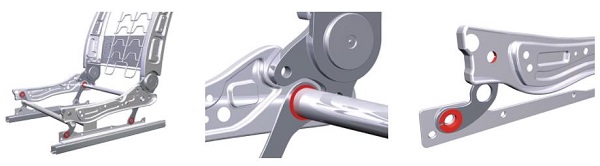 Figure 2: Norglide seat adjustment bearings. Source: Saint-Gobain
Designing around a stock bearing may result in a larger, heavier assembly as the mating parts must be manufactured to fit the bearing’s dimensions or mounting requirements. Due to these material and size limitations for off-the-shelf products a custom-engineered bearing may be the best solution, especially in consideration of fuel efficiency.
Government regulations are mandating that automotive OEMs reduce fuel consumption or increase vehicle fuel efficiency. Lightweighting vehicles through the selection of more efficient components and materials can help car manufacturers reach fuel efficiency goals. For example, the Vehicle Technology Office of U.S. Department of Energy states, “A 10% reduction in vehicle weight translates into a 6 to 7% increase in fuel economy…. Using lightweight components and high-efficiency engines enabled by advanced materials in one-quarter of the U.S. [automotive] fleet could save more than 5 billion gallons of fuel annually by 2030.”
 Figure 3: Norglide PTFE sliding bearings. Source: Saint-GobainSaint-Gobain Performance Plastics group manufactures custom-engineered, high-volume bearing solutions that can help optimize the design and enhance vehicle performance. Saint-Gobain Norglide® bearings are metal-reinforced, self-lubricating plain bearings with a layer of low-friction polytetrafluoroethylene (PTFE). They deliver market-leading performance across a range of applications.
Norglide bearings can be manufactured with a variety of metal backings and reinforcements, combined with a self-lubricating, low-friction PTFE bearing surface.
The following table shows a representative comparison of physical attributes for different automotive bearing types with the same bore size and similar widths.
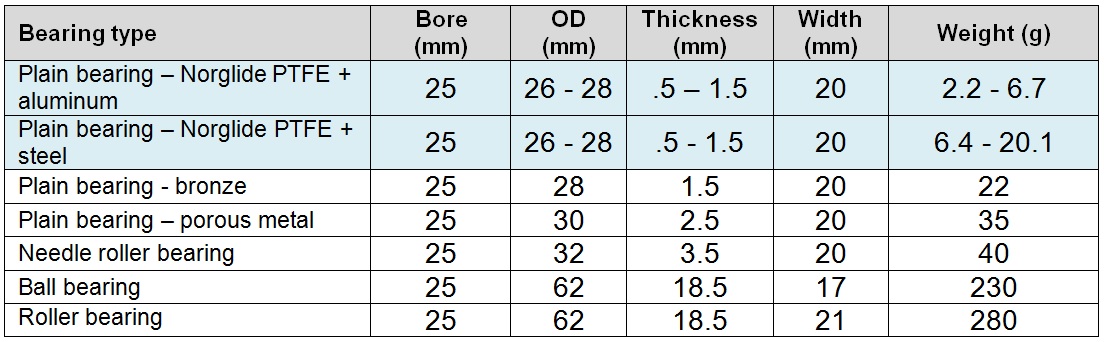
Ball and roller bearings have significantly larger cross-section thicknesses and weights as compared to needle roller and plain bearings, adding to vehicle weight and requiring more space for the assembly. Needle roller bearings have slightly larger cross-sections than plain bearings, but are two to ten times heavier than Norglide plain bearings of similar size. Norglide bearings can be manufactured with cross-sections as small as one-third as that of bronze and porous metal plain bearings and are significantly lighter as a result.
Norglide bearings combine lightweight properties and optimal performance characteristics.
Norglide Bearing Materials
Norglide bearings, produced by Saint-Gobain at its Willich factory, Germany, are manufactured by placing a low-friction PTFE compound as the sliding surface of a metal-reinforced, self-lubricating plain bearing. Using light materials with thin cross-sections requires minimal space and reduces bearing weight. Every application is unique and Norglide bearings are custom manufactured to suit the application requirements.
1. PTFE Compounds
Different PTFE filler compounds are used to control properties such as creep and electrical conductivity while maintaining the low coefficient of friction of pure PTFE. Compound options include:
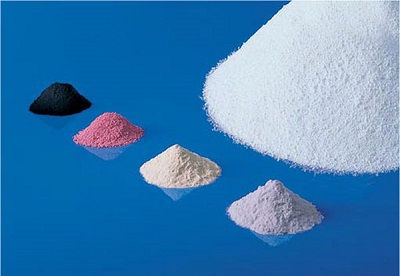 Figure 4: Norglide PTFE Compounds. Source: Saint-GobainCarbon fiber/graphite — Increased load carrying with reduced wear and creep.
- Carbon/graphite — Carbon provides similar properties to carbon fiber, but is less abrasive.
- EKONOL® — Aromatic polyester with improved wear resistance and low coefficient of friction for high-speed sliding applications and soft mating surfaces.
- Electrically conductive — Electrical conductivity can be tailored with selected fillers to control electrostatic discharge.
- Non-conductive — Reduces paint build-up on bearing surfaces for e-painting applications.
2. Reinforcement Material
PTFE can be combined with a reinforcement material to form a composite that improves specific performance criteria.
- Bronze — Bronze-stretched metal can be combined with PTFE to provide improved load and sizing capabilities.
- Fabric — A woven metal fabric of tin, bronze or stainless encapsulated with a PTFE compound provides high-load capabilities and the ability to withstand harsh environments.
3. Metal Backing
Norglide bearings are available in several backing options.
- Steel — Steel backings allow for the bearing housing to be machined, which provides an alternative to the sizing process to obtain the tightest tolerances on the inside diameter. Various methods protect the steel shell from corrosion.
- Stainless — Stainless-backed bearings are ideal for use in harsh environments.
- Aluminum — Aluminum-backed bearings provide lightweight, rust-free operation.
Saint-Gobain can design these fillers, backings and reinforcement materials to optimize the bearing solution for the customer.
Engineering Norglide for Your Automotive Applications
Every application is unique and every manufacturer has different challenges to overcome. Norglide bearings are custom designed for the specific needs of each individual customer.
Saint-Gobain engineers work closely with the customer to develop the correct material properties, performance characteristics and assembly process to ensure that the bearing performs exactly the way it needs to.
In addition to proper Norglide material selection, Saint-Gobain application engineers can help optimize your bearing assembly processes, reduce noise and vibration, maximize corrosion resistance and increase longevity to maximize the total cost benefit of Norglide. Saint-Gobain has extensive testing capabilities to evaluate noise, corrosion, friction and mechanical properties to validate variations of Norglide for specific application requirements.
Saint-Gobain has a one-to-one, engineer-to-engineer approach when working with its customers to develop a deep understanding of customer challenges and design a product that exceeds performance standards. The end result will be a solution that delivers on four key benefits.
- Smart design — Provide a solution that can reduce weight to deliver strong-yet-light materials, save space by replacing multiple parts or delivering ultra-thin components and cut costs by eliminating lubrication or combining components.
- Perfect Fit — Work with customers to deliver custom solutions with the ideal tolerance compensations to deliver the best possible fit between mating components and optimize assembly.
- Noise free — Deliver a solution that provides a quieter and more pleasant experience and reduces physical discomfort and wear by minimizing vibration.
- Long life — Norglide bearing solutions perform consistently over time by delivering controlled torque, low-friction or the highest corrosion protection.
Saint-Gobain’s Norglide bearings are small parts that make a big difference to OEMs and tier one suppliers around the world. In addition to automotive applications, Norglide bearings are manufactured in high volume for HVAC, bicycle and electronics applications.
Contact Saint-Gobain today to discuss your bearings applications and evaluate the most suitable high-performance Norglide products for your automotive operations. For additional information visit the Saint-Gobain website.

Thank you for this content. It was really helpful, you can read the related articles on my blog STARWEX.
I have also collected some data of the wheel bearing products, you can check out from the given STARWEX