Sponge-jamming device softens the touch of robotic arms
Marie Donlon | June 30, 2023Researchers from the University of Bristol in the U.K. have determined that a simple sponge could improve the grasp of robotic arms.
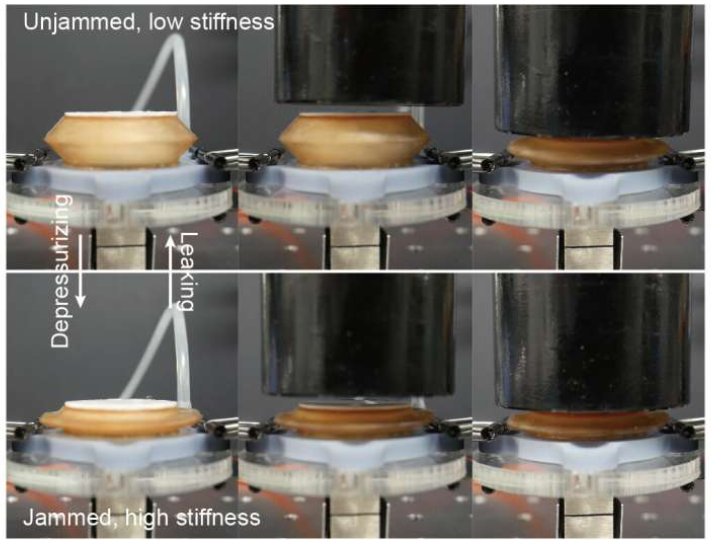
The so-called sponge-jamming device helps stiff robotic arms — which are limited in what they can handle thanks to their rigid design — to better handle delicate objects, thereby mimicking the variable stiffness of human touch.
 Source: University of Bristol
To achieve variable stiffness in its design, the team outfitted the end of a rigid robotic arm with the silicone sponge, making the robot-object point of contact safe.
According to its developers, the porous elastomer sponge will stiffen when squeezed, thereby transforming the robotic arm into a variable-stiffness device.
The researcher suggest that the device could be mounted to a variety of industrial robots used to grip jellies, eggs and other fragile materials. The device can also be used to make human-robot interaction safer. Further, the team believes the device could be used for applications such as robotic polishing and ultrasound imaging.
The article “A Silicone-sponge-based Variable-stiffness Device," details the sponge-jamming device.
For more information, watch the accompanying video that appears courtesy of Tianqi Yue from the University of Bristol.