Organ on a Chip Realized in 3D
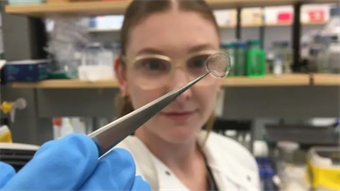
S. Himmelstein | October 29, 2018The 2D environments of petri dishes long used to develop and evaluate new drug formulations might soon be replaced with a 3D system that more accurately replicates human biology. An organ-on-a-chip device designed at the University of Cambridge, U.K., enables real-time continuous monitoring of cells and could be applied in the  Source: Roisin Owens/University of Cambridgedevelopment of new treatments for disease and reduced reliance on research animals.
The device incorporates cells inside a 3D transistor composed of a soft, sponge-like material inspired by native tissue structure. The conducting polymer sponge scaffold housing the cells is placed inside a plastic tube that admits nutrients essential for cell growth. By cultivating cells in 3D, the tool more accurately mimics the way that cells evolve and grow in the body.
The use of the soft sponge electrode instead of a traditional rigid metal electrode provides a more natural environment for cells and is key to the success of organ-on-a-chip technology in predicting the response of an organ to different stimuli. The design allows for real-time continuous monitoring, which supports longer duration toxicology testing and assessment of disease treatments.
The research is published in Science Advances.