The evolving roles of drones in healthcare
Candace Kastanis | June 30, 2023The use of drones in healthcare applications shifted quickly into becoming an essential tool. Medical drone technology is the piloting of unmanned aircraft systems (UAS) that can deliver healthcare tools such as vaccines, blood, tissue samples and medical supplies.
Drone piloting applications span many diverse commercial industries where an aerial advantage shows immense value. Areas of use include agriculture, real estate, business, surveillance, sports, military and now healthcare. Today’s drones used in healthcare equate to a touchless medical delivery system with a unique ability to access many hard-to-reach locations making it especially impactful in search and rescue situations.
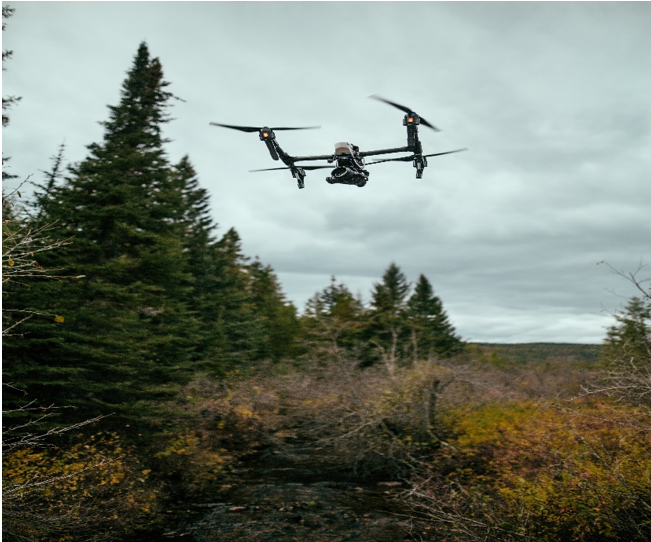 Source: Sam McGhee/Unsplash
In many ways, drone technology is still in a growth phase. Drone developers are exploring untapped use applications upon which to build, especially now that the new regulatory rule is in place. Because early commercial drone piloting fell into a new category of aircraft aviation, drones fell into a blurry mainstream space without clear regulations in place, distinguishing recreational fliers from commercial fliers.
Advantages
Commercial drones offer one distinct primary advantage — remote accessibility. Reaching remote areas can require painstaking effort and unfavorable time considerations, which consequently put human lives in danger. However, the use of UAS in critical healthcare sectors demonstrates a viable way to meet some of the time and accessibility-related challenges simplifying tasks related to emergency response, supply chain, outreach and disease management. Useful in a myriad of contexts, medical drone delivery advantages are demonstrating efficiency in the following ways:
- In emergencies, a drone can deliver lifesaving medical supplies like epinephrine, anti-venom, insulin or defibrillators to remote areas that would otherwise be difficult to access in time.
- Drones can deliver biological materials and supplies safely to areas with highly contagious diseases without risking human infection.
- Drones can drop off medications, body organs, blood and vaccines with potential time and cost savings compared to other transportation methods.
- Medical drone delivery is a more environmentally friendly option than diesel trucks. Environmental studies show that drones as a medical supply delivery method offer an 84% lower greenhouse-gas emission rate, consuming less than 94% less energy per parcel than diesel truck delivery.
Challenges
Repair and maintenance
Like many other newer technologies, a strong mission to create more skilled labor within the drone industry to fix and maintain them emerges. Equipment failure, theft, noise, system hacking and other unpredictable mechanical unknowns with unmanned aviation craft come into play, forcing developers to address and or implement a set of best-practices.
Solutions could come in the form of a cost-effective end-to-end maintenance program or replacement deployment alerts to secure payload investments and any downed aircraft. The concerns relate to a drone’s ability to withstand different weather conditions and remain in service. Safeguards to mitigate unpredictable changes in external temperature that could damage samples or other condition-sensitive biomaterials are also under consideration.
Regulatory concerns
Dr. Jeremy Tucker, vice president of Patient Safety and regional medical director at MEP Health, expressed concern about the visual line of sight limitation in a recent interview, saying the FAA Part 107-rule specification could provide measurable constraints for the healthcare industry. As a leading drone expert, he alludes to the fact that many healthcare applications involve the transportation of biomaterials that occur beyond the visual line of sight.
Additional regulatory concerns place a focus on how to implement drone-specific HIPAA compliance safeguards. Many legal questions have surfaced regarding whether drone ownership and operators should fall under certain medical authorities.
Case examples
Transportation of biological samples
A study of medical drone delivery to the Médecins Sans Frontières (MSF) in 2014 focused on evaluating the methodology for its ability to safely deliver patient samples to hospital laboratories for tuberculosis testing. The trial results indicated that the delivery drone method in place of ground transportation performed the task about 25% of the time.
Remote deliveries of biomaterials and medical supplies to developing countries
A study using Zipline drone technology to deliver blood, vaccines, contraceptives and other medical supplies to Rwanda documented impressive results. The overall positive conclusion supports continued engagement in similar projects using UAS technology.
Emergency monitoring
Shield’s AI UAV model works to assist first responders in gathering data via its proprietary “Hivemind” software. The drone model shows capabilities to explore surroundings and identify individuals needing assistance.
Artificial intelligence (AI) and drone technology
Integrating machine learning capabilities into the drone technology platform expanded the playing field significantly in terms of usage applications. AI interfaces give the drone autonomous flight power allowing the drone to travel safely over a much larger terrain because of embedded sensors that help them avoid accidental collisions. More importantly, case studies document the use of AI-enabled drone technology for its ability to deliver impressive 3D terrain views providing valuable aerial insight to ground supporters and enabling them to make informed decisions.
Newly enhanced drone models harbor deep learning AI technology and are applied toward giving unmanned aerial vehicles unprecedented informational depth. For example, AI-enabled drones possess features like spectral vision, microphones, video and audio playback. These AI tools assist in detecting ground movement, real-time monitoring, thermal readings and evaluating levels of threat that cannot be seen from the ground. Zipline, a popular drone manufacturer, estimates its battery drone models can reach a top speed of 80 mph and travel distances of 50 miles, making it possible to service approximately 10,000 global locations this year alone.
Summary
The UAS in healthcare-specific applications is a commonsense approach to timely delivery of medical supplies and assistance that will contribute to more favorable patient outcomes. As more strategic UAS partnerships form, and the regulatory kinks become more streamlined, efforts concerning health equity and access will continue to increase and improve.
About the author
Candace Kastanis, a previous laboratory professional, is a freelance medical and science writer. As a California native and resident, she enjoys the outdoors and spending time with her family and friends. Also a creative writer, Candace is excited about her upcoming fictional novel debut.