Pros and cons of various renewable energy storage systems
N. Mughees | April 25, 2023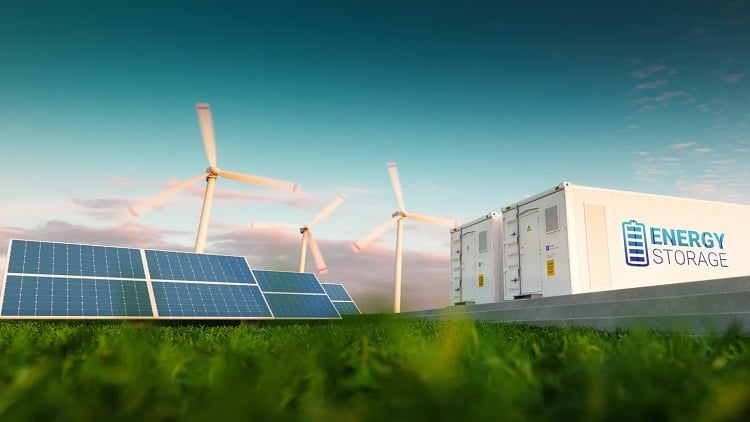 Source: Shutterstock
Integrating renewable energy sources into the electricity grid is impossible without energy storage solutions. The purpose of these energy storage systems is to capture energy produced in excess by renewables for use at a later time when energy demand is higher or the renewable source is unavailable. In addition to making it possible to continue using renewable energy sources when weather conditions are unfavorable, this also improves the reliability and stability of the power supply overall. The article covers the pros and cons of major energy storage options, including thermal, electrochemical, mechanical, magnetic and electric systems.
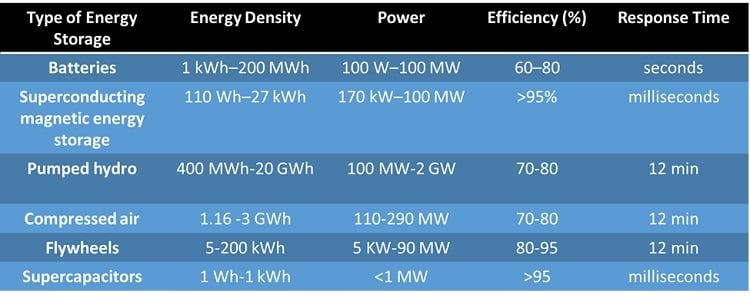 Comparison of different energy storage systems. Source: N. Mughees
Thermal energy storage systems
Thermal energy storage systems collect and store heat from renewable sources like solar or geothermal for later use. For example, storage of solar thermal energy involves capturing the sun's rays and using them to warm a fluid or a phase change material, which may then be used to heat a building's interior or a water supply. Using thermal energy storage devices for renewable energy has a number of benefits and drawbacks:
Pros
- It is possible to have a more adaptable and steady energy supply, which is useful for incorporating renewables into the grid.
- They allow energy to be stored and utilized as it is created, rather than being immediately consumed or lost, improving the overall efficiency of renewable energy systems.
- Using heat pumps or electric boilers as examples, thermal energy storage is far more cost-effective than electricity storage and offers great promise for integrating variable renewable energy sources like wind and solar into the heating and cooling industry.
Cons:
- This can be a problem for some applications because of their relatively limited storage capacity.
- Thermal energy storage systems may need frequent maintenance and monitoring to ensure they are working correctly and to extend their lifespan.
Electrochemical energy storage systems
Electrochemical energy storage systems use chemical energy to generate electricity. Fuel cells and batteries — particularly lithium-ion — are the most prevalent electrochemical energy storage technologies. The following are the pros and cons of using lithium-ion batteries for renewable energy.
Pros:
- They may be manufactured in a wide range of forms, allowing them to be tailored to a wide variety of applications.
- This battery has a low rate of self-discharge.
- A lot of power may be stored in a very small area because of the high energy density of lithium-ion batteries. Given the often-limited area available, this makes them ideal for use in renewable energy systems.
- Lithium-ion batteries may be charged and drained several times before needing to be replaced, thanks to their extended cycle life. They can withstand the repeated charging and discharging required in renewable energy systems.
Cons:
- They have a high degree of internal resistance, which tends to grow with time.
- The high price of lithium-ion batteries makes them problematic for use in some renewable energy systems. However, research is being conducted to make them affordable.
- Battery safety is an issue in some renewable energy applications because broken or overcharged lithium-ion batteries may be extremely destructive.
- Concerns have been raised surrounding the scalability and long-term viability of the technology because of its reliance on lithium, a scarce material whose mining and exploitation has negative effects on the environment and society.
Mechanical energy storage systems
Mechanical energy storage solutions employ water, heat or air with turbines, compressors and similar parts to capture gravitational energy or motion to store electricity. For example, pumped hydroelectric storage uses extra electricity to pump water to a higher elevation and then releases the water through a turbine to create electricity when needed. Another example is that of compressed air energy storage that uses excess power to compress air and stores it in subterranean caverns or tanks, which generates power when needed. Similarly, a flywheel energy storage system spins a flywheel fast using surplus electricity. When needed, the flywheel is slowed and the kinetic energy is utilized to create power through a generator. In general, the following are the pros and cons of using mechanical energy storage for renewable energy sources:
Pros:
- Large storage capacity
- Prolonged discharge times in case of pumped hydroelectric storage and compressed air energy storage
- Durable designs
- Technological maturity
- Long lifespan
- Rapid deployment time in case of flywheel
- Simple to maintain (compressed air energy storage).
Cons:
- There is a potential dependency on adjacent geography (elevation change) and environmental concerns in the case of pumped hydropower storage systems.
- Compressed air energy storage may be limited by the lack of suitable underground caverns, may call for combustion fuel (depending on the system type) and has seen only limited implementation.
- A flywheel's inability to withstand dynamic loads or external shocks is exacerbated by the device's limited discharge capacity and brief discharge times.
Magnetic energy storage systems
Magnetic energy storage systems, such as superconducting magnetic energy storage, store energy as a magnetic field and convert it to electrical energy as needed. These energy storage technologies are currently under development and exhibit the following advantages and disadvantages:
Pros:
- High energy density
- Fast response time
- No degradation
- High efficiency (over 90%)
Cons:
- Heavy outlay of capital
- Shortage of storage space
- Intricate machinery
- Need for superconducting materials that are not yet completely developed, may not be commercially accessible for some time
Electric energy storage systems
Supercapacitors store energy in an electric field, rather than through a chemical process like batteries do. The following are advantages and disadvantages of using them in systems that rely on renewable energy sources.
Pros:
- Faster charging and discharging times
- Higher power densities
- Fewer maintenance costs
- Less environmental impact
Cons:
- Comparatively low energy density in comparison to batteries
- Lower cycle life
- They are temperature sensitive, so they might not function as well in very cold or very hot conditions
- Costlier than batteries per kilowatt-hour stored.
Conclusion
Significant penetration of variable renewable energy sources into the electrical grid presents issues that are being met through the development of thermal, mechanical, electric, magnetic and electrochemical energy storage systems. These technologies will boost supply and help maintain equilibrium between supply and demand in the system that utilizes renewable energy sources.
The superconducting magnetic energy storage system is lightweight and simple to deploy; however, it has a high cost per kilowatt. Moreover, although the pumped hydro system is low-cost and efficient, it can only be used in coastal locations since the site must be near water. The compressed air system is low-maintenance and cost-effective, but it requires a cavern, and the volume of compressed air might be dangerous. Flywheels are effective solutions for the electrical grid because of their ability to store energy for extended periods of time. Lastly, due to the high energy density of lithium-ion batteries, a significant amount of power may be stored in a very small space. This makes them perfect for installation in renewable energy systems when space is at a premium.