Energy costs cut CERN operations
S. Himmelstein | October 17, 2022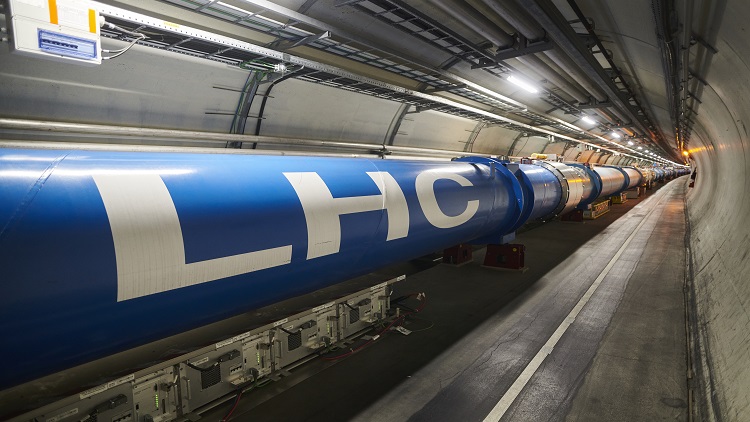 A chain of Large Hadron Collider dipole magnets. Operation of the system will be curtailed by 20% in 2023. Source: Samuel Joseph Hertzog/CERN
Escalating energy costs and supply concerns are taking a toll on every sector. CERN, the European Organization for Nuclear Research headquartered in Geneva, Switzerland, is implementing energy-saving measures in response to these trends and will reduce the planned operation of its accelerator complex by 20% in 2023.
The facility also plans to stop experiments this year at the end of November 2022, two weeks earlier than initially planned. At year-end CERN typically runs a few weeks of heavy-ion collisions in which lead nuclei are collided instead of protons and then turns off most systems in preparation for maintenance activities during winter. Starting this process two weeks earlier in 2022 is expected to provide considerable energy savings.
Physics experiments planned at accelerators such as the Super Proton Synchrotron (SPS) and the Large Hadron Collider will be curtailed by 20%. Additional measures being implemented to save energy on the CERN campus include switching off street lighting overnight, using sleep mode for unoccupied meeting rooms and turning the heating down one degree. Plans have also been developed for reduced-power configurations to face possible load shedding should it be required by the electricity supplier, EDF.