Better cleaning at food processors with swab test
Amy J. Born | July 01, 2021Cleaning and surface sanitation in food processing plants is an important part of preventing the microbial contamination of end food products that can lead to spoilage and possible health risks to consumers.
"Food scientists know that for processing plants, visual inspection is not a reliable indicator of cleaning-protocol success," said Randy Worobo, professor of food science at Cornell University. "All food factory 'ecosystems' are prone to niches where microorganisms can hang out or where food residues can persist. We need to find them."
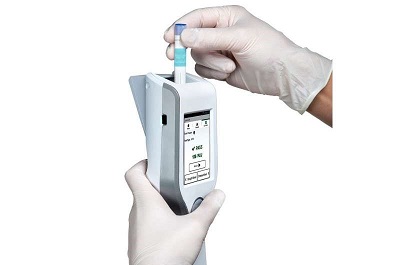 A food safety professional uses the 3M Clean-Trace luminometer to read a swab. Source: Cornell UniversityTo do so, Cornell University researchers collaborated with 3M Food Safety microbiologists in testing samples collected from the processing area in a commercial tofu manufacturing facility. The nine-month study demonstrated use of the 3M Clean-Trace Hygiene Monitoring and Management system for adenosine triphosphate (ATP) monitoring combined with 3M Petrifilm Plates to determine the effectiveness of an environmental monitoring program.
The process involved swiping facility surfaces with specially designed rapid-testing ATP swabs. The ATP produces a glow, similar to fireflies, when microorganisms are present. The scientists designed a custom plan using the ATP swab test to check dozens of critical points in the plant after cleaning. Then the swab is placed in a luminometer instrument to detect the bioluminescence of any contaminants present.
The luminometer converts the amount of light into relative light units and the instrument displays the value. By comparing that number to a defined threshold value, users can determine if the surface is dirty (if the number exceeds the threshold) and correct the way cleaning operations are performed.
Test results obtained by ATP monitoring and verified by additional microbiological assays showed that targeted cleaning can improve the environmental hygiene of food-processing plants.
The study is published in Applied and Environmental Microbiology.