Antibody stimulates tooth growth in mice
Marie Donlon | March 31, 2021Researchers from Japan’s Kyoto University and the University of Fukui have discovered a gene that stimulates tooth growth in mice.
According to the researchers, an antibody in the uterine sensitization associated gene-1 (or USAG-1) was used to grow an entire tooth in mice. Researchers accomplished this based on an understanding of the molecules behind tooth development.
"The morphogenesis of individual teeth depends on the interactions of several molecules including BMP, or bone morphogenetic protein, and Wnt signaling," explained Katsu Takahashi, a lead author of the study and a senior lecturer at the Kyoto University Graduate School of Medicine.
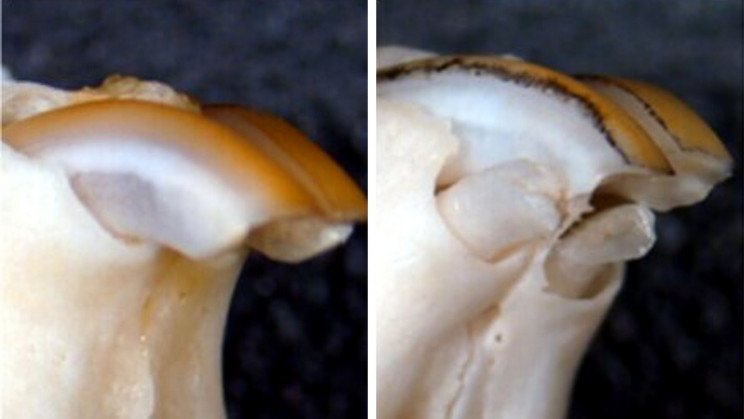 Source: Katsu Takahashi/Kyoto University
Because USAG-1 interacts with both BMP and Wnt, the researchers understood that they would need to suppress it to encourage tooth growth. To do this, the researchers observed the impact of assorted monoclonal antibodies — which are commonly used in the treatment of various cancers and in the development of vaccines — for USAG-1. According to researchers, one of the antibodies under observation disrupted the interaction of USAG-1 with just BMP and without any residual effects.
While experimenting with the antibody, researchers discovered that BMP signaling was critical for determining the number of teeth in mice. As such, one administration reportedly generated one entire tooth.
Going forward, the researchers intend to test antibodies on pigs and dogs.
The research is published in the journal Science Advances.