Watch a diagnostic device picture skin in 3D
S. Himmelstein | February 20, 2021A portable device designed to produce high-resolution 3D images of human skin within 10 minutes represents a low-cost tool for the rapid diagnosis of eczema and other skin conditions.
Equipment currently available to assess skin conditions only provides 2D images of the skin surface. The new skin mapping system generates data on the length and depth of skin ridges and grooves, providing the 3D information needed to improve diagnostic accuracy. The 1.5 V battery-powered device could also be of value in monitoring wound healing.
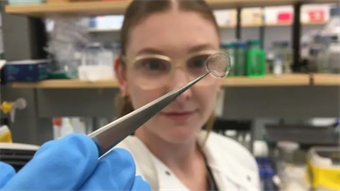
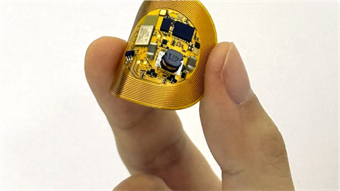
The device presses a specially devised gold-coated film onto skin to obtain an imprint of up to 5 cm2, which  The 3D-printed device is powered by a 1.5 V battery. Source: Nanyang Technological Universityis then subjected to an electric charge to generate a 3D image. A 3D-printed prototype was fabricated with a biodegradable plastic to yield a tool weighing 100 g and measuring 7 cm x 10 cm.
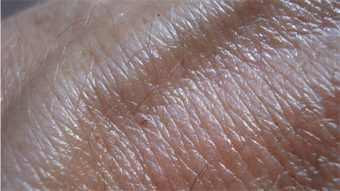
The system was demonstrated to efficiently map the pattern of various wounds such as punctures, lacerations, abrasions and incisions when tested with a pig skin model. The network of wrinkles on the back of a human hand was also captured on the film, which is sufficiently flexible to map features on uneven skin areas, such as the creases of an elbow and fingerprints.
Researchers from Nanyang Technological University (Singapore), Nanyang Environment and Water Research Institute (Singapore), Åbo Akademi University (Finland) and University of Otago (New Zealand) contributed to this development, which is described in Analytica Chimica Acta.