University team expands power grid planning, improves system resilience
Amy J. Born | January 16, 2021Networks of critical infrastructure systems, such as electric power, water and communications, have vulnerable connections. If one part goes down, the entire system is strained.
This vulnerability came to the attention of Claire Trevisan, a University of Virginia (UVA) engineering student in September 2017 when Hurricane Maria severely damaged Puerto Rico’s electric power grid and most of the island had no electricity for months. The civil and environmental engineering undergraduate approached her advisor about studying the problem and an interdisciplinary research team was established. The project led 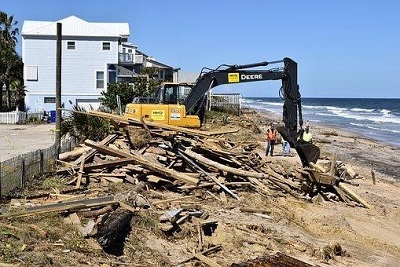 The model identifies the optimal combination of power generation sources when factoring in hurricane damage. Source: Pixabayto the development of a critical improvement to the energy optimization models used by engineers for infrastructure planning: integrating impacts of future hurricanes into grid designs.
Current optimization models consider costs of construction, fuel, emissions and resilience to find the least expensive way to deliver power under a set of constraints. They leave out the costs of predictable damage from hurricanes, wildfires, floods and other events not built into the models.
For over a century, the most efficient way to deliver power to customers has been a centralized generation plant feeding a huge network. The researchers examined the benefit of adding renewable energy sources, which are available in many parts of the country. Their model identifies the optimal combination of power generation sources when factoring in hurricane damage and shows that distributing more renewable energy sources across an area costs less than repairing a damaged centralized grid.
Puerto Rico is a good case study for testing the model, having been in the path of 13 named storms over the past 25 years. It has an outdated grid architecture and abundant solar and wind resources. Reliance on imported fossil fuels is expensive.
"In our study, we simulate the likelihood and intensity of a storm hitting the grid in each five-year time step. The hurricane intensity is used to predict the wind speed and project damage to the electric grid infrastructure," said team lead UVA Ph.D. student Jeffrey Bennett.
"The system then builds new infrastructure to be able to meet electricity demand. By considering combinations of hurricane intensities and probabilities, we are then able to project average electricity costs and examine how infrastructure investments vary. Our results show that hurricanes increase electricity costs by 32% based on historical hurricane trends, and more if you consider that storms are increasing in frequency and severity as a result of climate change. Transitioning to renewables and natural gas reduces costs and emissions regardless of hurricane frequency."
The team’s approach for simulating the future can be applied to any disaster related to weather or climate, including wildfires.
Scientists from University of Puerto Rico Mayagüez and North Carolina State University also contributed to this research, which is published in the journal Nature Energy.