Conductivity measurement of battery electrolyte using the right sensor
Dr. Kajal S. Jaiswal, courtesy of Mettler Toledo | October 21, 2026As the global demand for lithium-ion batteries continues to grow across electric vehicles (EVs), energy storage systems and consumer electronics, the importance of electrolyte characterization has never been greater. Among the critical quality attributes of a battery electrolyte, conductivity is one of the most important parameters influencing battery efficiency, charging speed and overall performance. Accurate conductivity measurement allows battery manufacturers and researchers to optimize electrolyte formulations, maintain product consistency and ensure reliable battery operation.
Why conductivity matters in battery electrolytes
Electrolytes serve as the ionic pathway between the anode and cathode within a battery cell. During charging and discharging, lithium ions move through the electrolyte, enabling energy storage and release. The conductivity of the electrolyte reflects how efficiently these ions can travel.
 Figure 1. Battery cell and microelectronic battery components illustrating the importance of accurate conductivity measurement for optimizing electrolyte performance and ion transport efficiency. Source: Mettler Toledo
Higher ionic conductivity typically results in:
- Lower internal resistance
- Faster charging capabilities
- Improved power delivery
- Reduced heat generation
- Better battery efficiency and cycle life
Poor conductivity can negatively impact battery performance, resulting in slower charging, reduced capacity, increased energy losses and shortened battery lifespan. Consequently, conductivity measurement has become an essential analytical tool throughout battery research, development, quality control and production.
Challenges in measuring battery electrolytes
Unlike aqueous samples commonly analyzed in laboratories, battery electrolytes present unique analytical challenges. Most lithium-ion battery electrolytes consist of lithium salt dissolved in organic solvents such as ethylene carbonate (EC), dimethyl carbonate (DMC) and ethyl methyl carbonate (EMC).
These electrolytes often exhibit:
- Relatively low conductivity values
- High sensitivity to moisture contamination
- Aggressive chemical properties
- Significant temperature dependence
- Requirements for highly precise measurements
Conventional conductivity sensors designed for water-based applications may not provide sufficient accuracy or chemical resistance. Therefore, specialized conductivity sensors are essential for obtaining reliable measurements.
Selecting the right conductivity sensor
Optimized cell constant
The conductivity sensor's cell constant must match the conductivity range of the sample. Battery electrolytes often require right selection of sensors to achieve high sensitivity and accurate measurement across narrow conductivity ranges.
Using an improperly selected sensor can introduce measurement errors and reduce reproducibility, making it difficult to monitor subtle formulation changes.
Chemical resistance
Battery electrolytes contain aggressive solvents that can degrade incompatible sensor materials. Conductivity sensors equipped with chemically resistant materials such as PEEK, stainless steel, graphite, or glass components provide long-term durability and measurement stability.
Integrated temperature compensation
Conductivity is highly affected by temperature. Even slight temperature variations can significantly change conductivity readings. Conductivity sensors may incorporate precise temperature sensors that automatically compensate for temperature fluctuations, ensuring consistent and comparable results across different measurements.
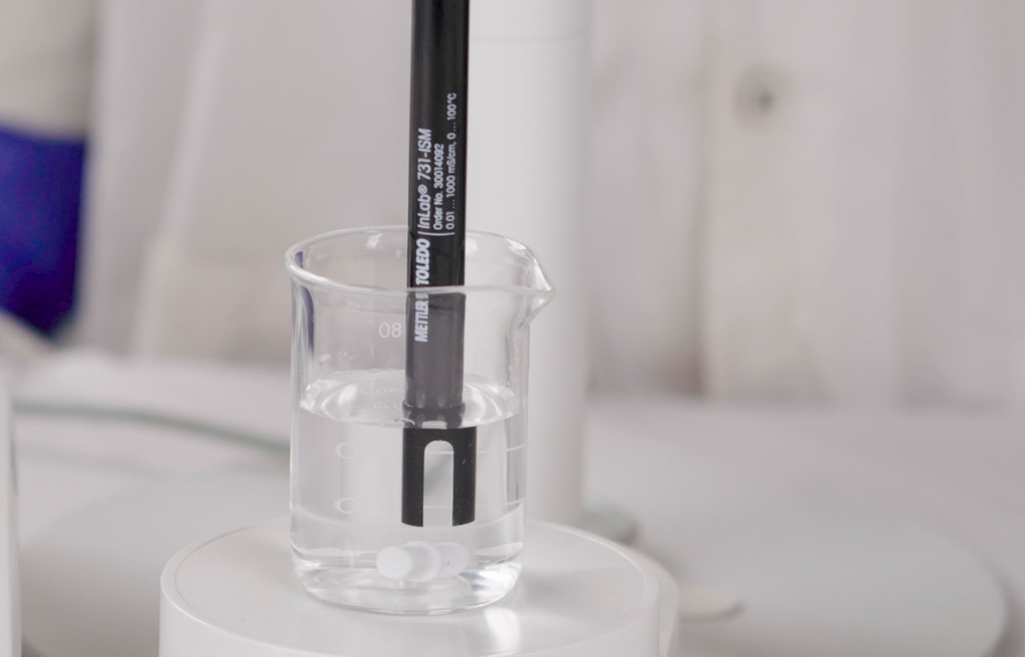 Figure 2. Measurement of battery electrolyte conductivity with the InLab 731-ISM sensor to support battery research and quality control. Source: Mettler Toledo
High accuracy and repeatability
Battery manufacturers require highly repeatable analytical data to support quality control and product development. Digital conductivity sensors provide enhanced signal stability, reduced electrical noise and superior measurement accuracy compared to traditional analog systems.
Key applications
Electrolyte formulation development
During laboratory-scale research, scientists evaluate the influence of solvent composition, salt concentration and additives on electrolyte conductivity. NineFocus meter and InLab DES conductivity sensors provide high precision measurement capabilities that help researchers optimize electrolyte performance.
Quality control laboratories
Conductivity testing is routinely performed to verify incoming raw materials and finished electrolyte batches. digital conductivity systems streamline routine testing while ensuring traceable and reproducible results.
Manufacturing and process monitoring
During electrolyte preparation, conductivity measurements can be used as a rapid quality indicator to confirm correct concentrations and mixing conditions before cell filling operations. Digital sensors and sensor diagnostic technology help improve productivity and reduce operator errors.
Best practices for reliable measurements
To achieve accurate conductivity results in battery electrolyte applications:
- Use conductivity sensors designed for non-aqueous samples.
- Maintain strict temperature control.
- Minimize moisture exposure during testing.
- Perform routine calibration verification.
- Select chemically compatible sensor materials.
- Utilize digital sensors for enhanced traceability and data integrity.
Conclusion
Conductivity measurement is a critical quality parameter for battery electrolytes because it directly influences ion transport, charging performance, efficiency and battery lifespan. However, achieving accurate and repeatable results requires selecting the right conductivity sensor and measurement platform.
By implementing the right conductivity and pH measurement solutions, battery manufacturers can improve process consistency, accelerate product development, strengthen quality control programs and support the production of high-performance batteries for the rapidly expanding energy storage market.
Explore application notes on Battery Electrolyte Analysis and CMP Slurry Measurement for proven workflows, key analytical insights and recommended pH and conductivity measurement solutions.