Watch: 3D-printed blood vessels are sugar-based
S. Himmelstein | July 07, 2020Technology to generate artificial vascular networks capable of supplying oxygen and nutrients to thousands of cells is limited. Tests with extrusion 3D printing have proven the process to be insufficient to produce fine structures with complex morphologies. A sweet solution to the synthesis of complex, viable vascular networks was recently demonstrated: Laser sintering of powdered sugars yields highly detailed structures that can maintain cell viability.
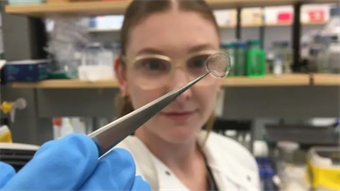
An open-source, selective laser sintering platform was used by researchers from Rice University, the University of Washington, Baylor College of Medicine and the Nervous System design studio to fabricate templates of 3D-printed  A sample of blood vessel templates 3D printed using a special blend of powdered sugars. Source: B. Martin/Rice Universitypowdered sugar. A computational algorithm was also developed to optimize the design of the resulting branching vascular networks.
The templates are then encased with hydrogels loaded with living cells to create vessel networks, and as the gel solidifies the sugar is dissolved and flushed away to form the vessel structures needed to transmit oxygen and nutrients to the cells. Endothelial cells were seeded inside the passageways and the viability of rodent liver cells in surrounding tissues was monitored. The densely packed cells were kept alive for two weeks in the artificial constructs.
The 3D-printing technique and customized algorithm could be used to design customized networks for different uses.