
Proposed flight procedure reduced noise, CO2 emissions
Marie Donlon | June 16, 2020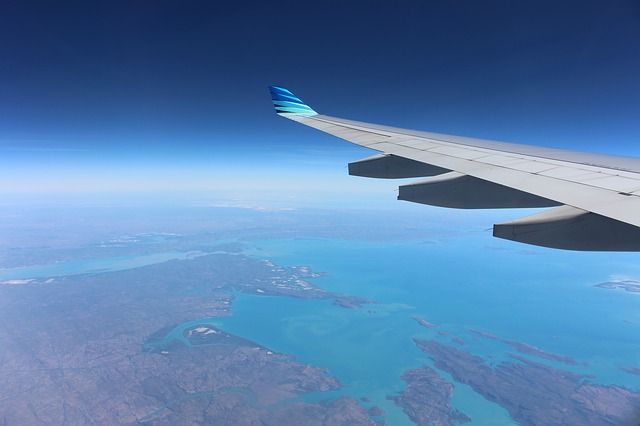 A proposal devised by a Massachusetts Institute of Technology (MIT) graduate student last year has proven to be a cost-effective solution for the aviation industry, reducing both noise pollution and CO2 emissions.
As part of Boeing’s Ecodemonstrator program where innovators are encouraged to pitch ideas for improving aviation safety and efficiency, MIT grad student Jacqueline Thomas presented plans for her “delayed deceleration approach” to address noise pollution and CO2 emissions without making significant modifications to existing aircraft.
The approach, which includes procedures for pilots to follow, was initially built as a computational framework for analyzing aircraft noise and measuring how changes to operational flight procedures might result in the reductions to noise and CO2 emissions. Thomas' analysis included an assessment of how aircraft components move and interact to produce noise. Thomas also used the model to analyze flight performance data, which enabled her to assess how aircraft produced noise during acceleration and deceleration.
According to Thomas, the framework served as the foundation for a full-scope overflight noise model that can be examined against community data to demonstrate how modifying inputs impact noise pollution in communities near airports.
“What resulted from this framework was my concept for the delayed deceleration approach, a new flight procedure where the aircraft remains cleanly configured for as long as possible during approach, meaning the flaps, slats, and landing gear remain upright for as long as possible,” Thomas explained.
“When the aircraft has a clean configuration, it is more aerodynamic, creating less drag and allowing it to maintain engines at a lower power setting for longer duration in the flight. As a result, the plane burns less fuel, decreasing carbon emissions, and generates less noise for the community on the ground.”
Following a series of tests conducted by Boeing pilots and engineers, the pilots reported feeling comfortable with Thomas’ proposed approach and Thomas hopes that the approach will become standard in the aviation industry.
Read here about the noise-reduction steps taken at two major airports.


Interesting approach to the issue.
I have to wonder if it would require more pilot inputs closer to the point of touchdown? Will that increase pilot workload at arguably the most critical portion of any flight?
From a safety point of view, I want the pilots to have plenty of time to configure the flight surfaces for landing and opportunity to correct as necessary.
Landing noise is much less than departures, so I'm not sure that this is worth the effort.