Century-old wire arc additive manufacturing gaining a foothold
David Wagman | January 30, 2020Most processes that are referred to as additive manufacturing, or 3D printing, are relatively new. But one, wire arc additive manufacturing (WAAM), traces its roots to the 1920s and is gaining attention today as a cost-effective and time-saving 3D printing tool.
WAAM uses an electric arc as the heat source to melt wire, which is then extruded as beads. The beads stick together and create a layer of metal material. As with other 3D printing techniques, this basic process is repeated layer by layer until the part is completed. The weld bead is deposited as a single layer of material. Successive weld beads are layered to form three-dimensional shapes. The arc is then extinguished and drawn to deposit a successive layer.
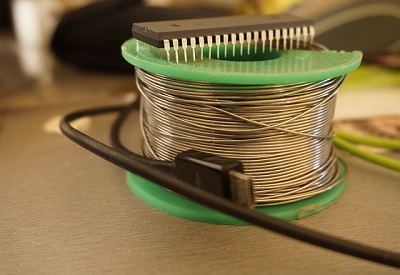 Figure 1: Welding wire is less expensive than materials used in powder-based additive manufacturing.Because WAAM uses a layering approach, material is deposited only where it is needed, resulting in less wasted material. Welding wire is also less expensive than materials used in powder-based additive manufacturing. This is due in part to the fact that WAAM hardware usually includes readily available welding equipment, which typically is less costly than many metal 3D printers.
WAAM may be a good option for repairing and maintaining components like turbine blades, molds and dies. Used this way, worn-out or damaged parts can be repaired by depositing new material on its surface. WAAM is also well suited for the kinds of large metal components common in aerospace, marine, automotive and architectural applications.
Heat management is one challenge associated with WAAM. That is because the printing process involves high temperatures. This causes a build-up of residual heat, a problem not uncommon with metal 3D printing. The residual heat results in a continuously changing thermal field. This must be accounted for if a deposited layer is to be accurate and free of defects.
Also, when using certain materials, shielding is necessary to create an inert atmosphere to optimize layer-building conditions. This requirement means that the WAAM process must take place in an inert gas chamber. This can limit the size of parts that can be built and increase equipment costs.
In general, if a material can be used as a welding wire, it also can be used to manufacture parts by WAAM. Deposited materials include carbon and low alloy steels, stainless steel, nickel-based alloys, titanium alloys and aluminum alloys. For many of the materials, the deposit properties are like those expected from conventional weld metal in a joint.
Most wire feeds available for GMAW or GTAW processes can be used in WAAM. In general, the same limitations apply regarding shielding requirements, precision and weld position. Materials that posses an inherently high oxidation potential, like titanium, may require an inert gas chamber, which becomes cost inhibitive.
A basic additive manufacturing system consists of a combination of a motion system to deposit material layer by layer, a heat source and feedstock. WAAM offers a combination of an electric arc as the heat source and wire as feedstock. Motion is provided either by a robotic system or computer-controlled gantries. WAAM hardware currently relies on standard, off-the-shelf welding equipment: welding power source, torches and wire feeding systems are typical.
Materials such as aluminum or steel typically do not need gas shielding. This means the maximum part size is usually determined largely by the reach of the robot arm or manipulator. For materials that do require shielding, such as titanium, the size is limited by the size of the chamber used to create the inert atmosphere. Note that shielding is required for all WAAM processes. Certain alloys are highly reactive and may only be deposited in an inert gas chamber, which would pose size constraints and added costs.
The adoption of WAAM is being driven by the need for increased manufacturing efficiency. Its ability to produce very near net shape preforms without the need for complex tooling, molds or dies can result in cost and lead-time reductions, increased material efficiency, improved component performance and reduction of inventory and logistics costs.
Although automated processes are being developed, skilled operators remain relevant in terms of breaking down a component into sub-shapes, deciding the build order, considering thermal field issues, and assigning appropriate deposition parameters.
Resources
Materials — Current status and perspectives on wire and arc additive manufacturing (2019)