Reinforced super ice is a composite ready to rival concrete
Marie Donlon | October 10, 2026A team of scientists from The Hebrew University of Jerusalem has created a new type of reinforced ice that is 10 times stronger than traditional ice.
The ice, dubbed BioPykrete, rivals concrete in terms of strength. The team suggested that the material might eventually be a valuable building material in some of the world’s coldest locations because it gradually deforms instead of shattering.
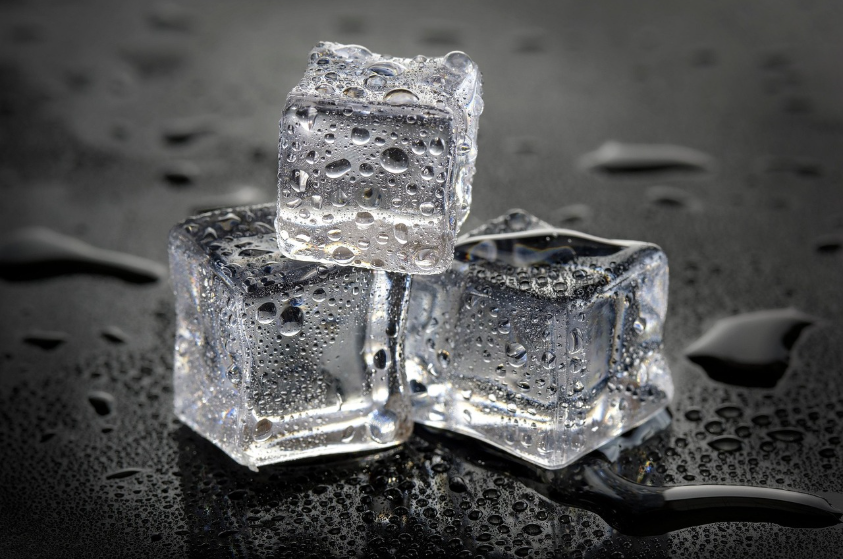
The team created BioPykrete by reinforcing ice with plant-based crystals and a specially designed protein, producing a concrete-like material that absorbs 70 times more energy that regular ice before breaking.
“We wanted to go beyond simply mixing fibers into ice and instead control how the different materials connect at the molecular level,” Professor Ido Braslavsky of The Hebrew University of Jerusalem’s Robert H. Smith Faculty of Agriculture, Food and Environment said in a statement.
“The result changes not only how strong the ice is, but also how it breaks. Instead of suddenly shattering, it can absorb much more energy and deform gradually.”
Taking inspiration from a World War II-era material called Pykrete — which is composed of a blend of ice and wood pulp — the team mixed cellulose nanocrystals, which are tiny, stiff particles derived from cellulose, with water. Cellulose is the ingredient that gives plants their structure. The team also developed a protein that binds to both ice and cellulose and added it to the mixture. During freezing, the nanocrystals arranged themselves into a 3D network around microscopic pockets of ice, while the protein acted as a so-called molecular glue, holding the structure together.
To test the material, the researchers compressed small cylinders of pure ice, ice reinforced with cellulose alone and BioPykrete until each failed. BioPykrete withstood about 10 times the compressive load of pure ice, putting it in the range of standard concrete. The engineered protein was critical to these properties, doubling both the strength and energy absorption of BioPykrete when compared with an ice-and-cellulose mixture without the protein.
The researchers said BioPykrete could eventually serve as a biodegradable, lower-carbon building material in Arctic and Antarctic regions, where construction materials are scarce and costly to ship in and concrete must be heated for weeks to cure properly.
However, BioPykrete remains a proof of concept. Further testing is needed to determine how the material performs over extended periods, withstands repeated freeze-thaw cycles and responds to prolonged pressure.
An article detailing the enhanced ice, “Biomimetic engineering of a fortified ice composite with enhanced mechanical properties,” appears in the journal Colloids and Surfaces B: Biointerfaces.