
Nuclear waste disposal materials prone to fast corrosion
S. Himmelstein | January 28, 2020In the absence of permanent disposal facilities, high-level nuclear waste must be immobilized and stored. The long-term safety of this approach is questioned by Ohio State University researchers, who determined that materials used to store such waste corrode far more quickly than previously thought and could pose  environmental hazards once buried in repositories.
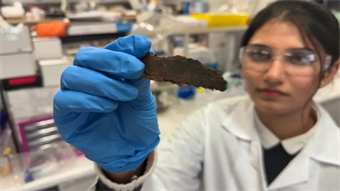
High-level defense waste is currently combined with other materials to form glass or ceramics, which are then enclosed in metallic canisters. Under simulated repository conditions, corrosion of these containers was observed to accelerate at the interfaces of different barrier materials, which has not been considered in current safety and performance assessment models. Severe localized corrosion was documented at interfaces between stainless steel and a model nuclear waste glass and between stainless steel and a ceramic waste form.
The iron component of stainless steel interacts with the silicon constituents of glass, promoting corrosive reactions. Similar interface reactions that undermine canister service life and integrity were also evident for ceramics encased in stainless steel.
Compatible barrier materials are needed to prevent corrosion and optimize geological repository system performance.


The need for nuclear waste storage will be relieved when we start using fast neutron reactors instead of the currently most-used thermal neutron reactors. This is so because the waste from thermal reactors can be used as fuel in fast reactors. In addition, fast reactors are much more efficient, getting about 100 times more energy from the uranium, resulting in much less waste that needs to be stored for much less time because the highly radioactive components have been used to produce energy.