Enabling real people to solve real problems: OKdo
December 17, 2019Sponsored Content
The projects that makers, entrepreneurs and design engineers work on vary in scale, complexity and end uses. Members of all three of these groups now have one significant advantage in common: OKdo.
What is OKdo?
OKdo is the latest brand established by Electrocomponents plc (ECM), the long-established multi-channel industrial and electronics distributor supporting customers across the product life cycle. ECM launched OKdo on April 4 to address the unique needs of the single board computer (SBC) and internet of things (IoT) markets — and only these markets. The new brand’s intent is to inspire, enable and trail blaze for anyone who has an idea they want to turn into a reality.
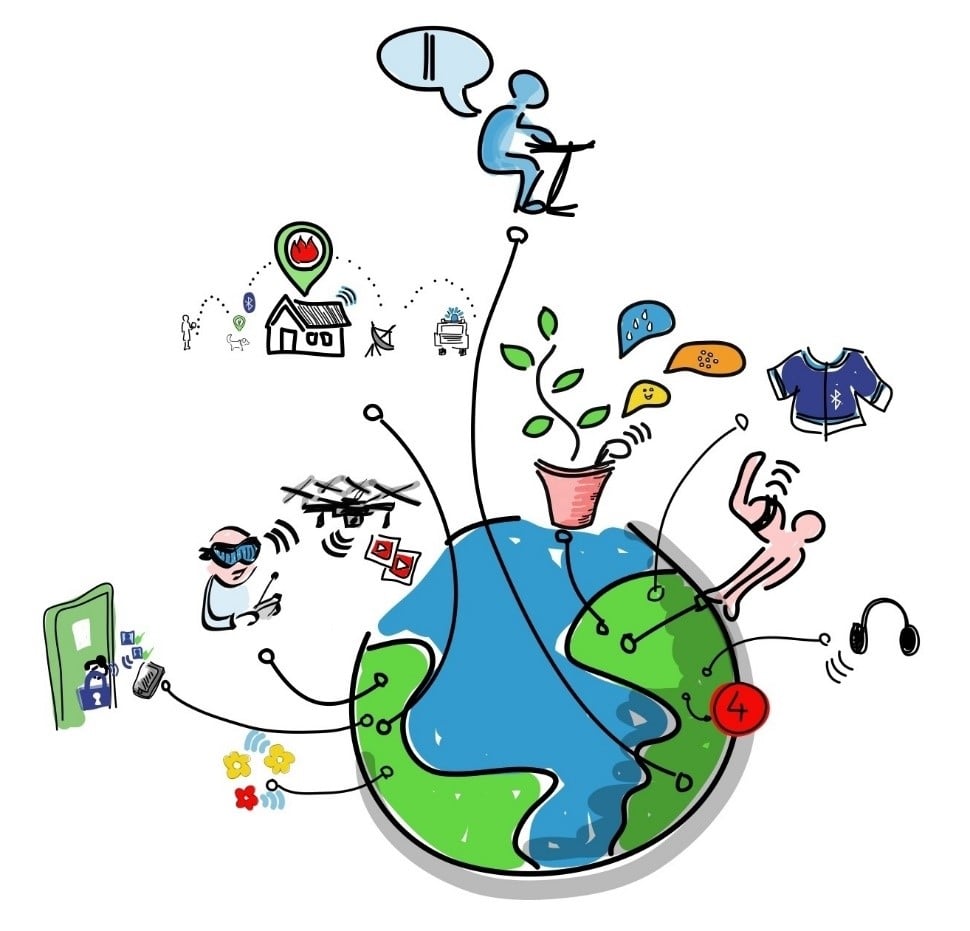 Figure 1: OKdo addresses the unique needs of the IoT and SBC markets. Source: Wilgengebroed/CC BY 2.0How does OKdo do this? By providing end-to-end SBC and IoT products, services and support. They sell hardware directly to makers and will soon also offer services, including rapid prototyping. OKdo is uniquely positioned to offer hardware, software, development support and manufacturing services to industrial design engineers and entrepreneurs looking to change the world we live in.
OKdo supports innovative projects by providing a deep and broad selection of products and services. It has a wide selection of SBC boards and accessories from Arduino, BeagleBoard and other companies. In addition, OKdo is one of two global manufacturers for Raspberry Pi. Working with its technology partners, OKdo will be the first company to bring new SBC-based technology products to market — giving customers a significant advantage over their competition. In addition to hardware, OKdo makes development tools available directly through their website.
What sets OKdo apart from other distribution businesses are services readily available through OKdo.com that are tailored to different groups of users. Makers can link up with each other and discuss designs via the company’s projects portal. Services for business customers include linking the entrepreneur or design engineer with rapid product prototyping and manufacturing services. Rapid prototyping services come with professional support and a quality guarantee. OKdo experts help choose the right manufacturing service for every variation from high volume low mix all the way through to low volume high mix, and they use the Stage-Gate innovation process to ensure a successful outcome. Designers can also take advantage of the free cloud-based IoT development platform.
Inspiration: Projects for positive change
Search for a piece of hardware on OKdo’s website and the results will include links not only to products but also interesting project ideas, complete with instructions. SBC and IoT technology are solving real-life problems for businesses and are helping to change the world we live in.
Here are just some examples of SBC and IoT applications that solve real-life problems for a business, a zoo and an individual with a visual impairment. The common thread through these projects is the innovative use of off-the-shelf hardware to solve problems.
Fluid Intelligence
Finland-based Fluid Intelligence works with industrial clients to optimize their use of lubricating oil. Traditionally, machine maintenance, including lubricating oil replacement, follows a standard schedule. Fluid Intelligence provides solutions that enable customers to change oil when necessary — earlier or later than scheduled — based on objective analysis of oil conditions.
Fluid Intelligence’s Fluid Connected Oil Solutions product family is powered by artificial intelligence (AI) and offers real-time oil condition monitoring. Critical components of this system are sensors that collect oil condition data and Arduino class SBCs that transmit the data via the Fluid IoT network to Fluid Cloud, the service platform where AI software analyzes changes and sends alerts when humans need to intervene.
Marwell Zoo
The problem that the Marwell Zoo — located in Winchester, U.K. — wanted to solve was a similar resource-maximization problem. Zoo staff needed to heat animal enclosures only when animals were inside. Animals do not necessarily follow a rigid schedule, clocking in and out of an enclosure at regular times. The solution is a heating system that turns on when it senses the presence of animals and turns off when they leave. The completed system saves 10% to 30% over previous electricity use while providing animals appropriate levels of climate control.
Zoo staff worked with IBM U.K.’s CTO to develop a test system for the nyala house. The system relies on a Raspberry Pi infrared camera and Arduino SBCs, along with temperature sensors and a neural network, to turn infrared heating lamps on and off. The neural network analyzes sensor information and when it determines that animals are present, it sends a signal to turn on the heaters. The camera collects information — infrared images — that the network uses to learn whether its analyses are correct. The network was built entirely with off-the-shelf hardware. The successful nyala house system encouraged the zoo to install the same system in other zoo shelters.
RooVision
Rupert Powell, a volunteer engineer for ReMap, a U.K. charity that custom-makes equipment to help the disabled, figured out how to enable a visually challenged Liverpool Football Club fan to see a game. The client is a season ticket holder who could only follow games through the announcer’s play-by-play. Since he can see high-contrast images that are within 20 to 30 cm of his eyes, the fan would watch replays by sitting close to a television. The engineer had the idea to use a virtual reality (VR) headset, which would position images at the proper distance. How could he send images from a live match to the headset?
The solution incorporated the VR headset, a video camera, a powerful zoom lens and a Raspberry Pi to reproduce the look and feel of a live football match. The video camera focuses on the game and the wearer uses the Raspberry Pi to control the zoom lens. The device has been dubbed RooVision after its inventor.
OK! Time to do a great project
These three examples showcase projects in very disparate settings that came to life via SBCs and IoT technology. Contact OKdo to find out how off-the-shelf hardware can turn your ideas into a working solution.