Modern tech solves ancient mystery
Siobhan Treacy | November 21, 2019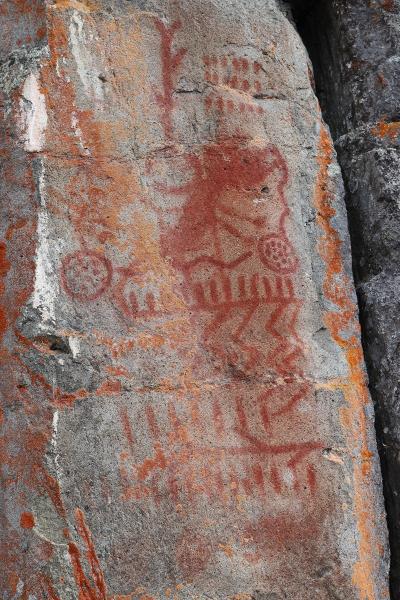 This is one of the pieces of rock art found at Babine Lake. It is representative of the rock art that was analyzed in the study. Source: University of Missouri
Researchers from the University of Missouri have discovered how ancient humans created ochre paint. For this study, the team focused on hunter-gatherers who lived in North America and used ochre to create pictographs at Babine Lake, British Columbia. This was the first study of Babine Lake rock art.
Ochre, orange-brown sediment, is one of Earth’s oldest naturally occurring materials. Ancient humans used it to create rock art, also called pictographs. Ochre has been used by humans for 200,000 years, but there is not a lot known about just how they created the paint.
The people who lived or traveled through Babine Lake used ochre they harvested from aquatic, iron-rich bacteria gathered from the lake.
The team used modern technology to test potential methods to create ochre paint. One of these methods included heating a single grain of ochre and using an electron microscope to watch the effects temperature change had on the grain.
Researchers found that Babine Lake ancient people heated the bacteria to about 750° C to 850° C. This sparked the bacteria’s color transformation to create a rich red. They did this over open hearth fires because the transformation cannot happen naturally.
The study was published in Scientific Reports.