Researchers develop smartphone system for locating active shooters
Marie Donlon | November 20, 2019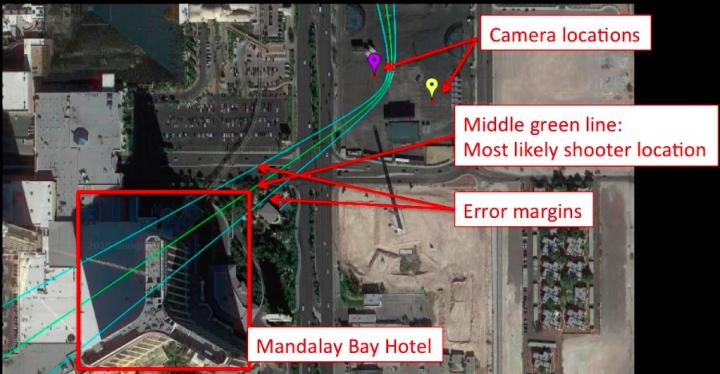 The system used video from smartphones to help locate shooter. Source: Carnegie Mellon UniversityResearchers from Carnegie Mellon University have created a system that is capable of locating an active shooter based on information gleaned from nearby smartphones used to record the event.
The system, which is called Video Event Reconstruction Analysis (VERA), relies on machine learning to sync up the video feeds of as few as three smartphones to measure the points at which camera footage of an event was captured.
That data is then coupled with audio from the recording to locate from the direction from which gunshots were fired. The system examines the time between the crack created by the bullet’s shockwave and the muzzle blast, which travels at the speed of sound. The audio helps to identify the gun type used in the shooting, thereby enabling researchers to estimate the speed of the bullet. Using these details, VERA calculates a shooter’s proximity from the smartphones recording the event.
To demonstrate that VERA works, researchers applied the system to video recordings captured by smartphones during the 2017 mass shooting in Las Vegas, Nev., during which 58 people were killed and hundreds more wounded. When applied to those recordings, the system accurately pinpointed the location of the shooter inside the Mandalay Bay Hotel as he fired down on a crowd of concertgoers. The system located the shooter from data discerned from the first three gunshots fired by the shooter.
According to the Carnegie Mellon team, VERA is intended to complement and replace technology already in use by public safety officials using commercial microphone arrays to locate shooters.
VERA was presented and subsequently released as open-source code at the Association for Computing Machinery's International Conference on Multimedia in Nice, France.