
Robot swarm could detect nuclear material
Marie Donlon | November 13, 2019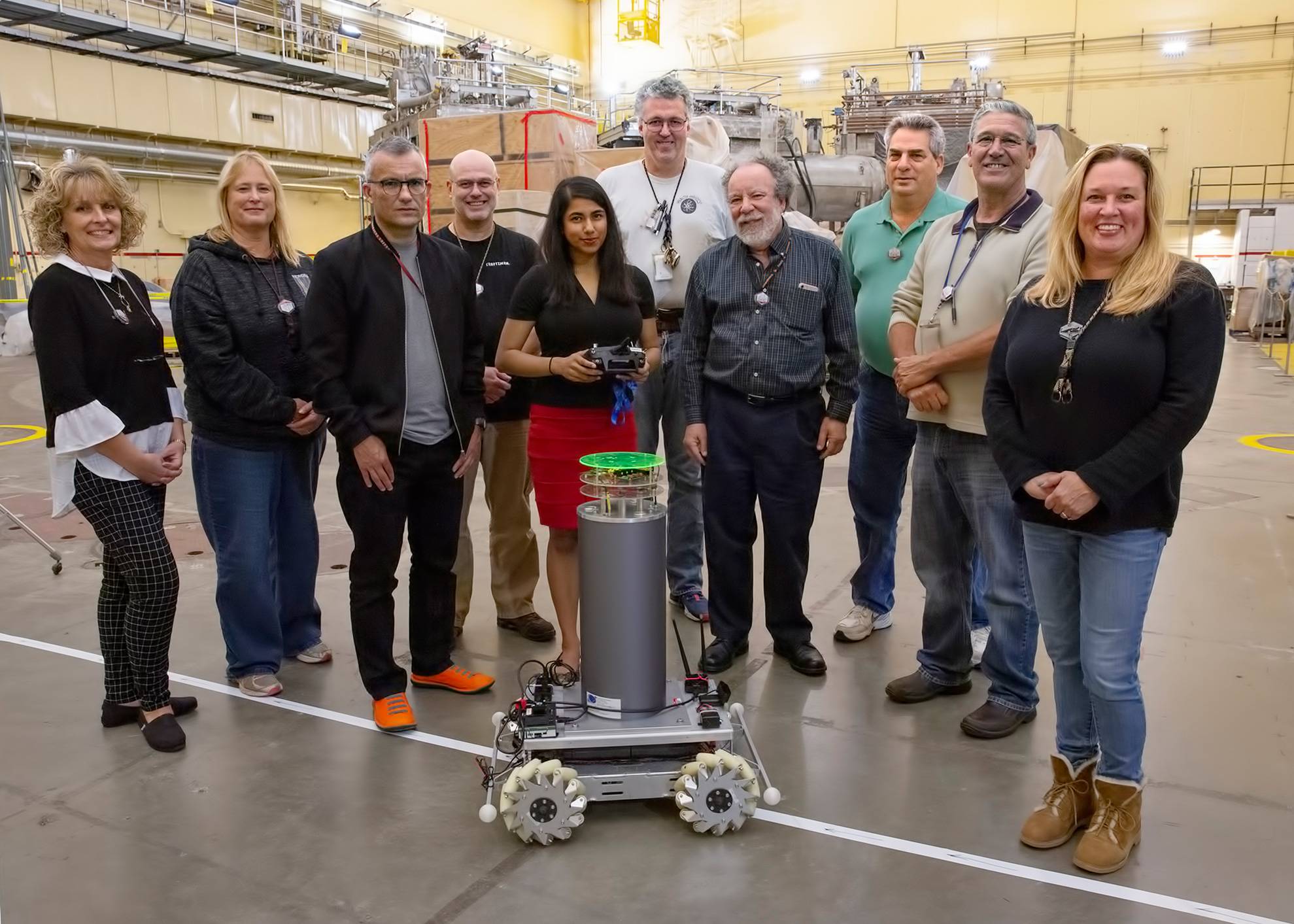 Prototype of the inspector bot. Source: Princeton UniversityResearchers at the United States Department of Energy’s (DOE’s) Princeton Plasma Physics Laboratory (PPPL) and Princeton University have developed a prototype robot that is capable of identifying the source of nuclear radiation.
Dubbed the “inspector bot,” the 3 ft tall robot is composed of a cylinder of polyethylene plastic, which houses three neutron counters placed 120° apart and fixed to the wheeled robot.
The detectors, according to the researchers, are sensitive to neutron energy, which is emitted from nuclear materials. The detectors are also capable of determining the direction the neutrons are coming from as well as the level of neutron energy; for example, low neutron energy might suggest attempts at concealment.
The developers envision using the inspector bot to protect gas centrifuge enrichment facilities where uranium is enriched to fuel nuclear power facilities and to detect low-enriched uranium present in a plant, which might suggest that weapons-grade uranium production is taking place.
Likewise, the bot could be used to inspect storage facilities housing nuclear warheads as part of future disarmament treaties. The inspector bot could potentially be used to determine whether or not warheads were being held and whether or not their numbers match what was declared.
Eventually, the developers hope to create a swarm of fully autonomous inspector bots using machine learning software to enable the swarm to independently navigate and communicate with each other while conducting inspections.
The autonomous warhead detecting robots join an assortment of already developed robots taking on tasks thought to be too dangerous for humans. Some examples include the United States Navy's successful test of an autonomous, robotic system that detects, identifies and destroys sea mines as well as microbots that have been developed to clean up radioactive waste. In addition, security robots are patrolling airports and hospitals around the world.



With the addition of a similar array of gamma detectors, this could be useful for reactor safety checks, particularly after unloading spent fuel, and in reactor fuel or waste processing facilities. With a rugged-terrain chassis, it would also be very helpful for finding fallout fragments in recovery operations should, God forbid, we have a nuclear weapon used against us.
What no target bullseye painted on it. If a group is working with nuclear material, they will not allow the inspection.