Researchers creates ultra-small accelerometer using graphene
Marie Donlon | September 05, 2019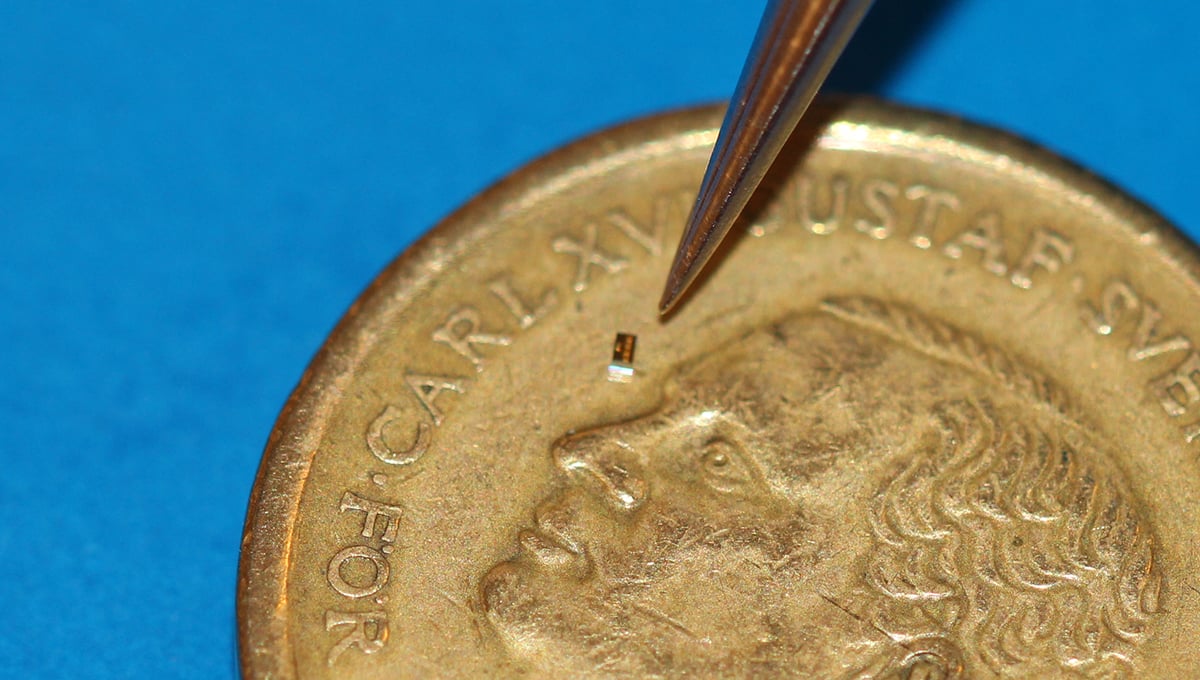 The accelerometer created by KTH researchers could be used in mobile phones for navigation, mobile games and pedometers, as well as monitoring systems for heart disease and motion-capture wearables that can monitor even the slightest movements of the human body. Source: KTHResearchers at KTH Royal Institute of Technology in Stockholm, and RWTH Aachen University and research institute AMO GmbH, both from Aachen, Germany, have created what the team is calling the world’s smallest electromechanical accelerometer.
To develop the tiny accelerometer, which is a device for measuring acceleration, the team used graphene, a highly conductive nanomaterial. The ability to build such ultra-small accelerometers, according to Xuge Fan, a researcher in the department for micro and nanosystems at KTH, is largely due to graphene’s unique material properties.
What makes graphene suitable for such an application is how fast and easily electrons pass through, coupled with its mechanical strength. Graphene shows extreme potential, according to Fan, for a host of nano-electromechanical system applications.
“We can scale down components because of the material’s atomic-scale thickness, and it has great electrical and mechanical properties,” Fan explained. “We created a piezoresistive NEMS [nanoelectromechanical systems] accelerometer that is dramatically smaller than any MEMS accelerometers available today, but retains the sensitivity these systems require.”
The team believes that the ultra-small accelerometer will one day benefit mobile phone navigation, mobile games and pedometers. The ultra-small accelerometer could also potentially be used in monitoring systems for cardiovascular diseases, portable motion capture technologies and ultra-sensitive wearables among other applications. Additionally, the development may pave the way for ultra-miniaturized actuators and sensors.
The team detailed their work in the journal Nature Electronics.