
Construction set to begin on 430-mile Permian Highway Pipeline
Shawn Martin | September 03, 2019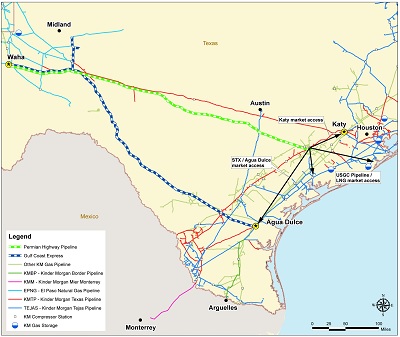 Source: Kinder MorganConstruction of the Permian Highway, a natural gas pipeline project funded by a $2 billion partnership between Kinder Morgan, Midland's EagleClaw Midstream and Altus Midstream subsidiary, is scheduled to commence this autumn.
The Permian Highway Pipeline (PHP) project will connect the Permian Basin in West Texas to the Gulf Coast. The 430-mile, 42-in diameter pipeline will transport an estimated 2.1 billion cubic feet of natural gas per day (Bcf/d) and has an in-service date of fourth quarter of next year.
The PHP project will provide additional takeaway capacity to an area where flaring and venting of natural gas has been at an all-time high, as flaring and venting of natural gas in the Permian Basin was estimated at 661 million cubic feet per day (MMcfd) in the first quarter of 2019. It will also generate approximately 2,500 local construction and 18 full-time jobs, and provide $42 million in increased annual revenue to state and local taxing authorities.
The pipeline creates a value stream for associated gas being produced alongside crude oil in the Permian Basin. The increased pipeline capacity will allow producers to export liquefied natural gas and offset the amount of natural gas being flared or vented in the Permian Basin.
Opposition to the PHP stems from potential negative impacts to local tourism economies, drinking water, sensitive ecosystem, endangered species and property values. Caldwell County recently declined to approve a memorandum of understanding with Kinder Morgan regarding the PHP. They are waiting to observe how current negotiations between affected landowners and Kinder Morgan play out before a vote on the memorandum is made.
Last June, a Texas district court judge ruled in favor of Kinder Morgan after a lawsuit was filed by Hays County, the City of Kyle and some individual landowners who claimed that the PHP would endanger waterways and residential areas. Texas state law grants Kinder Morgan the power to use eminent domain and acquire easements for the pipeline, and the lawsuit was dismissed.
The Wimberley Valley Watershed Association along with conservation districts and school districts across Hill Country oppose the pipeline’s route and are requesting that the state legislature reforms eminent domain and instate a requirement for environmental impact studies to be completed for all intrastate pipelines.



Is anyone surprised that the state granted Kinder Morgan imminent domain? Everything IS bigger in Texas, including the a**holes.