An AI approach to improve IVF success
S. Himmelstein | May 02, 2019A new artificial intelligence (AI) method can identify with a great degree of accuracy whether a 5-day-old, in vitro fertilized human embryo has a high potential to progress to a successful pregnancy. The technique, which analyzes time-lapse images of the early-stage embryos, could reduce the number of in vitro fertilization cycles it takes to achieve a successful pregnancy, improve the success rate of in vitro fertilization (IVF) and minimize the risk of multiple pregnancies.
IVF technology has enabled millions to give birth, but its average success rate in the U.S is only 45%. Selecting an embryo with the best chances of developing into a healthy pregnancy is currently a subjective 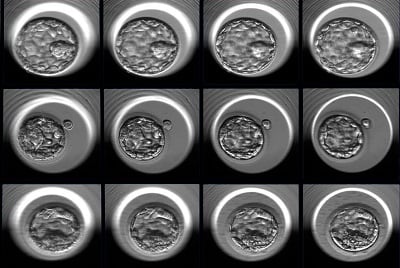 The embryos are classified as good (top), fair (middle) and poor quality (bottom). Source: Weill Cornell Medicine of Cornell Universityprocess marked by lack of agreement among embryologists as to how to predict the viability of an individual embryo based upon its appearance at the blastocyst stage, in which it consists of only 200-300 cells.
Researchers used 12,000 photos of human embryos taken 110 hours after fertilization to train an AI algorithm to discriminate between poor and good embryo quality. Each embryo was first assigned a grade that considered various aspects of the embryo’s appearance, after which a statistical analysis was conducted to correlate the embryo grade with the probability of realizing a successful pregnancy outcome. Embryos were considered good quality if the chances exceeded 58% and poor quality if the chances were below 35%. After training and validation, the algorithm classified the quality of a new set of images with 97% accuracy.
However, past research has indicated that only 80% of the pregnancy success rate relies on the embryo quality. Maternal age plays a role and is associated with a decreasing rate of successful embryo implantation. The research team then developed another computational approach that can consider maternal age and the quality of multiple embryos to determine the best combination to achieve a single live birth. A decision tree was constructed to assess the successful pregnancy rate by using a combination of embryo quality and patient age.
Researchers from Weill Cornell Medicine of Cornell University, Yale University, Imperial College (U.K.), Emory University School of Medicine and Universidad de Valencia (Spain) contributed to this study, which is published in NPJ Digital Medicine.