Mobile bioprinter speeds wound healing
S. Himmelstein | March 02, 2019Bioprinting, an extension of established 3D printing techniques, is an emerging technology aiming to produce living tissue, bone, blood vessels and potentially whole organs. The process could provide the opportunity to generate patient-specific tissue for the development of accurate, targeted and personalized 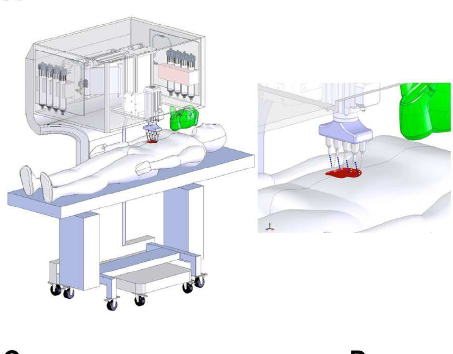 Schematic demonstrating scale, design and components of the skin bioprinter. Source: Wake Forest Institute for Regenerative Medicine treatments.
A mobile skin printing system developed by researchers from the Wake Forest Institute for Regenerative Medicine represents progress in this field and a new tool for on-site management of extensive wounds. The bedside-based technique uses the patient’s own skin cells to eliminate rejection risks associated with donor cells and to avoid painful skin grafts.
Dermal fibroblasts and other skin cell types are harvested from a small biopsy of uninjured tissue and mixed with a hydrogel to create the printable biomaterial. The bioprinter uses integrated imaging technology to scan the wound, then feeds this data into the software to tell the print heads which cells to deliver to which wound location, layer by layer. Cells are deposited directly into the wound to replicate the layered skin structure and accelerate the formation of healthy skin structure and function.
The capabilities of the bioprinting system to deliver appropriate cell types and concentrations in a layered manner was demonstrated with mouse and porcine models. Results of this research are published in Scientific Reports.