An Efficient Single-atom Gold-platinum Catalyst
S. Himmelstein | September 27, 2018A single-atom catalyst composed of gold and platinum offers a nearly 100-fold increase in efficiency over 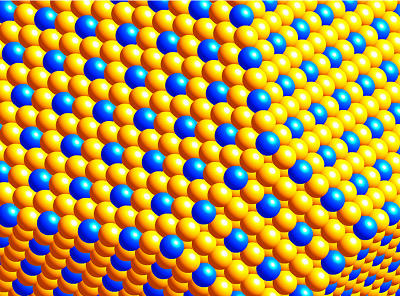 Platinum atoms (blue) are surrounded by gold atoms (yellow). This structure maximizes the platinum catalyst’s efficiency. Source: Dalhousie Universitymarket platinum catalysts used to control toxic exhaust gases from traditional car engines. High efficiency is sustained during the catalyst’s service life, in contrast to the efficiency declines experienced as platinum catalysts are poisoned by carbon monoxide molecules.
Conducting research at three Canadian Light Source facilities at the University of Saskatchewan, Dalhousie University scientists tested alloyed catalysts with a focus on different combinations and structures of platinum and gold. Reducing the platinum content resulted in improved catalytic function, and samples with low platinum content exhibited unprecedented electrocatalytic activity for the oxidation of formic acid. The poisoning effect was eliminated when platinum clusters were absent from larger gold lattices.
The colloidal method used to prepare the alloy resulted in a higher overall concentration of platinum atoms than typical alloys by nearly 10 times. The tailored catalytic alloy was fabricated with 7% single-platinum atoms.
As gold and platinum are expensive components, the researchers will next investigate other, less costly metals, to make this technology more widely applicable.