Watch: Nanomaterial Production by Flame Spray Pyrolysis
S. Himmelstein | September 07, 2018New manufacturing technology developed by the U.S. Department of Energy’s Argonne National Laboratory (ANL) lends itself to the manufacture of nanomaterials in high volumes. The lab’s Combustion Synthesis Research Facility in Illinois has demonstrated how the Flame Spray Pyrolysis (FSP) process yields samples at pre-pilot-scale one-day rates up to 500 grams of a single chemistry or up to 50 grams each of up to four different chemistries or process conditions.
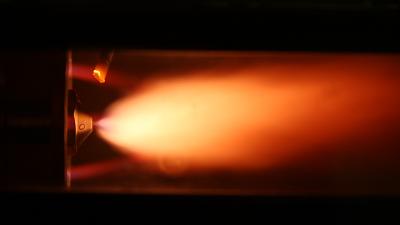 Benefits of the new manufacturing technology include faster production rates and reduced material waste than standard wet chemistry processes. Source: ANLThe FSP process offers cost savings relative to materials synthesis by wet chemistry methods due to faster production rates and reduced material waste. It allows for commodity-scale production of silica, metallic, oxide and alloy powders or particulate films and uses advanced diagnostics to optimize complex material targets such as aluminum-doped lithium lanthanum zirconium oxide. A clean-in-place fixture enables daily cleaning of the combustion tube, which permits switching chemistries daily without cross-contamination.
The continuous FSP process produces nanometer monolithic particles instead of porous micron-sized particles. ANL researchers plan to expand the facility with the addition of a planar laser induced fluorescence (PLIF) laser diagnostic system to develop a better understanding of the flame chemistries involved. Multi-physics simulations of the FSP process will also be conducted and validated by the PLIF diagnostic tool.