Studying Premature Birth Agents with a Placenta Barrier-on-a-Chip
S. Himmelstein | August 03, 2018According to the Centers for Disease Control, the trend in premature birth rates has experienced an uptick in the last few years. The mechanisms underlying this adverse pregnancy outcome are poorly understood,  A new device could help explain why babies are born prematurely. Source: Praisaeng/Shutterstock.comprompting Duke University researchers to design a placental barrier-on-a-chip that enables investigation of inflammatory responses to bacterial infection.
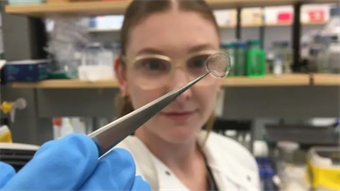
The microfluidic device is a polycarbonate membrane that is seeded with placental and maternal cells drawn from patients who have had a C-section. A channel above and below the membrane allows the researchers to draw fluid across at a very low rate, mimicking blood flow through an active placenta. A porous membrane separating the two cell layers enables the tissues to form a placental barrier between them.
E. coli bacteria added to the maternal layer proliferated rapidly and invaded the placental barrier. The researchers observed inflammation and cell death in both of the adjoining maternal and fetal layers. The placental barrier-on-a-chip platform is expected to help shed light on inflammatory responses in human placenta and on the mechanism of viral transmissions, such as Zika and HIV.