
Bake a Fossil in 24 Hours
S. Himmelstein | July 29, 2018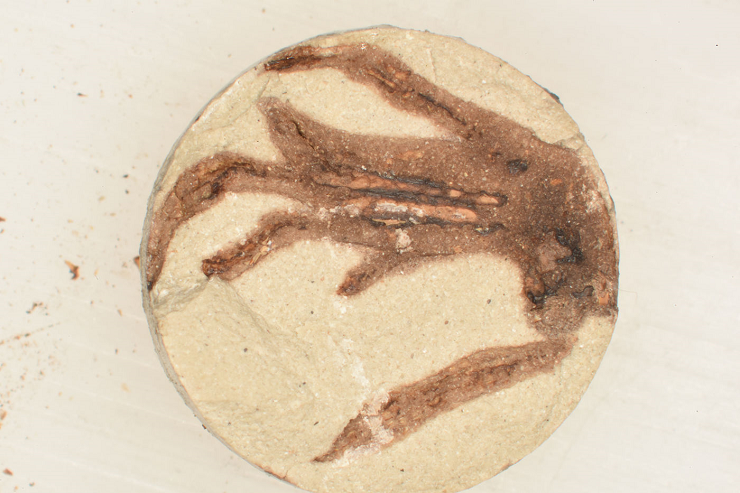 Scientists developed a way to simulate the fossilization process in about a day. Source: The Field MuseumTaphonomy, the study of the fossilization process, has been part of paleontology since the 1950s. Understanding the pathways that lead to preservation is vital to utilizing fossil information in evolutionary and paleoecological studies. Paleontologists are interested not only in the skeletal remains that fossils preserve, but also in how the fossils themselves were formed, as understanding these processes can help experts get a better idea of extinct animals and their environments.
Unfortunately, tens of thousands to millions of years are required to complete the fossilization process. Efforts to accelerate fossilization have involved wrapping specimens in foil or sealed containers before subjecting them to intense heat and pressure.
A more realistic mechanism for fast-forwarding fossilization has been engineered by researchers from Chicago’s Field Museum, the University of Bristol (UK) and the Foundation for Scientific Advancement (Arizona). Their ‘Easy-Bake’ process entails the use of clay and a hydraulic press to produce fossils in about 24 hours.
The press was used to pack bird feathers, leaves and other modern-day specimens into dime-sized clay tablets, which were then heated in a sealed metal tube at over 410 degrees Fahrenheit and 3500 psi pressure. After about a day under these conditions, the samples were recovered and appeared to be true fossils.
The researchers observed exposed melanosomes, the structures that contain the biomolecule melanin that give feathers and skin their color, under a scanning electron microscope; these components have been detected in real fossils. Proteins, fatty tissues and other less stable materials were absent, as befits a genuine relic.
The preservation protocol is expected to benefit the study of exceptional fossils, those that include skin, feathers and other soft tissues as well as bone. The ability to engineer exceptional fossils in the laboratory could offer new insights into the process.
"The ability to engineer exceptional fossils in the laboratory could offer new insights into the process" - and could also lead to a new trade in rip-offs!