Forabot handles, sorts and identifies fossils
Marie Donlon | December 29, 2022The so-called Forabot uses a combination of robotics and artificial intelligence (AI) to isolate, image and identify the fossils of organisms called foraminifera — or forams.
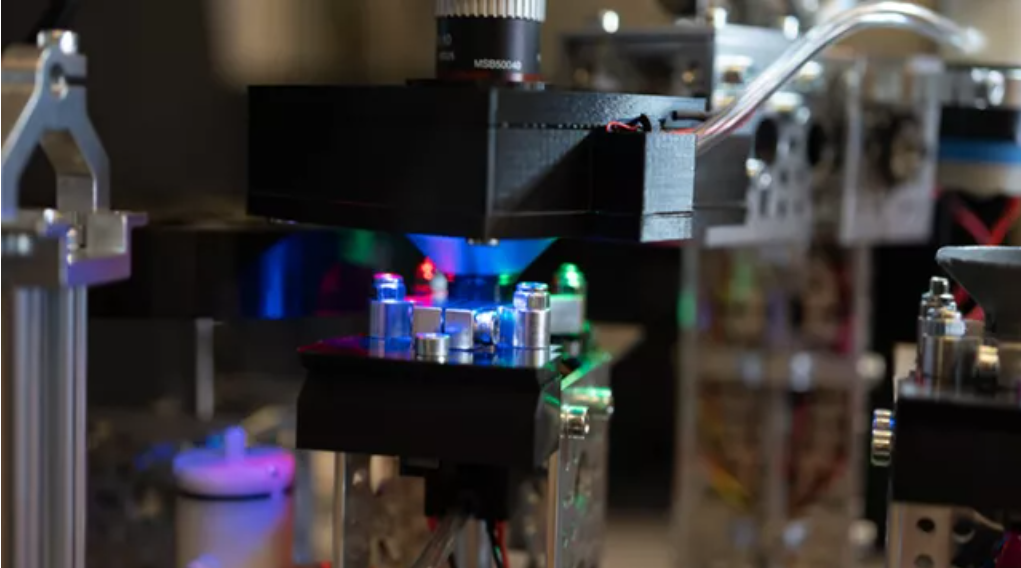 The section of 'Forabot' that photographs individual fossils so that they can be identified, using AI. Source: Edgar Lobaton and Thomas Marchitto
Forams, which are neither plant nor animal (protists), have been in the world’s oceans for more than 100 million years. Once they die, they leave behind millimeter-wide shells that can reportedly reveal information about the ocean’s characteristics, telling researchers about the ocean’s chemistry and temperatures at the time the forams’ shells were created.
Because this analysis can be time-consuming, the North Carolina State University team created the Forabot, which can identify six different foram types with a 79% rate of accuracy and process 27 forams an hour.
Using the Forabot, researchers initially have to wash and sieve a sample of hundreds of forams, which is then placed into a container dubbed the isolation tower.
At the bottom of the isolation tower is a needle, according to the researchers, that moves upward through the sample to lift a single foram up so that it can be removed from the tower by suction. From the isolation tower, the foram is pulled via suction to the imaging tower where an automated, high-resolution camera captures images of the foram. Once the images are captured, the fossil is picked up — again by needle — and held until it is suctioned up and subsequently deposited in an appropriate container at a sorting station.
The Forabot is detailed in the article, Forabot: Automated Planktic Foraminifera Isolation and Imaging, which appears in the journal Geochemistry, Geophysics, Geosystems.
More information about the Forabot can be found in the accompanying video that appears courtesy of North Carolina State University.