New Material Means Stride for Bioprinting
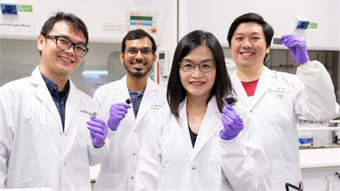
Tony Pallone | May 03, 2018 Bioengineering professor Yi Hong led research on a new bioprinting material.Bioprinting is making another stride forward thanks to a highly elastic biodegradable hydrogel developed by researchers at the University of Texas at Arlington (UTA).
A provisional patent application has been filed for the new material, which is biocompatible and biodegradable — and can mimic natural human soft tissues. Thanks to the tenability of its mechanical properties, it will be able to generate multiple types of tissues, including skin, skeletal muscles, blood vessels and heart muscles.
"Soft tissue bioprinting suffers from significant challenges, as the hydrogels were often brittle and un-stretchable and could not mimic the mechanical behavior of human soft tissues," said Yi Hong, a bioengineering professor and leader of the research project. To overcome these challenges, Hong and his team developed a system that used a single cross-linking mechanism activated by visible light.
The research is described in the journal American Chemical Society's ACS Applied Materials and Interface, and was selected as an American Chemical Society Editors' Choice.
Hong said that the material employs two chemical compounds, polycaprolactone (PCL) and polyethylene glycol (PEG), which are widely used in U.S. Food and Drug Administration-approved devices and implants. This “should facilitate quick translation of the material into pre-clinical and clinical trials in the future,” he added.